
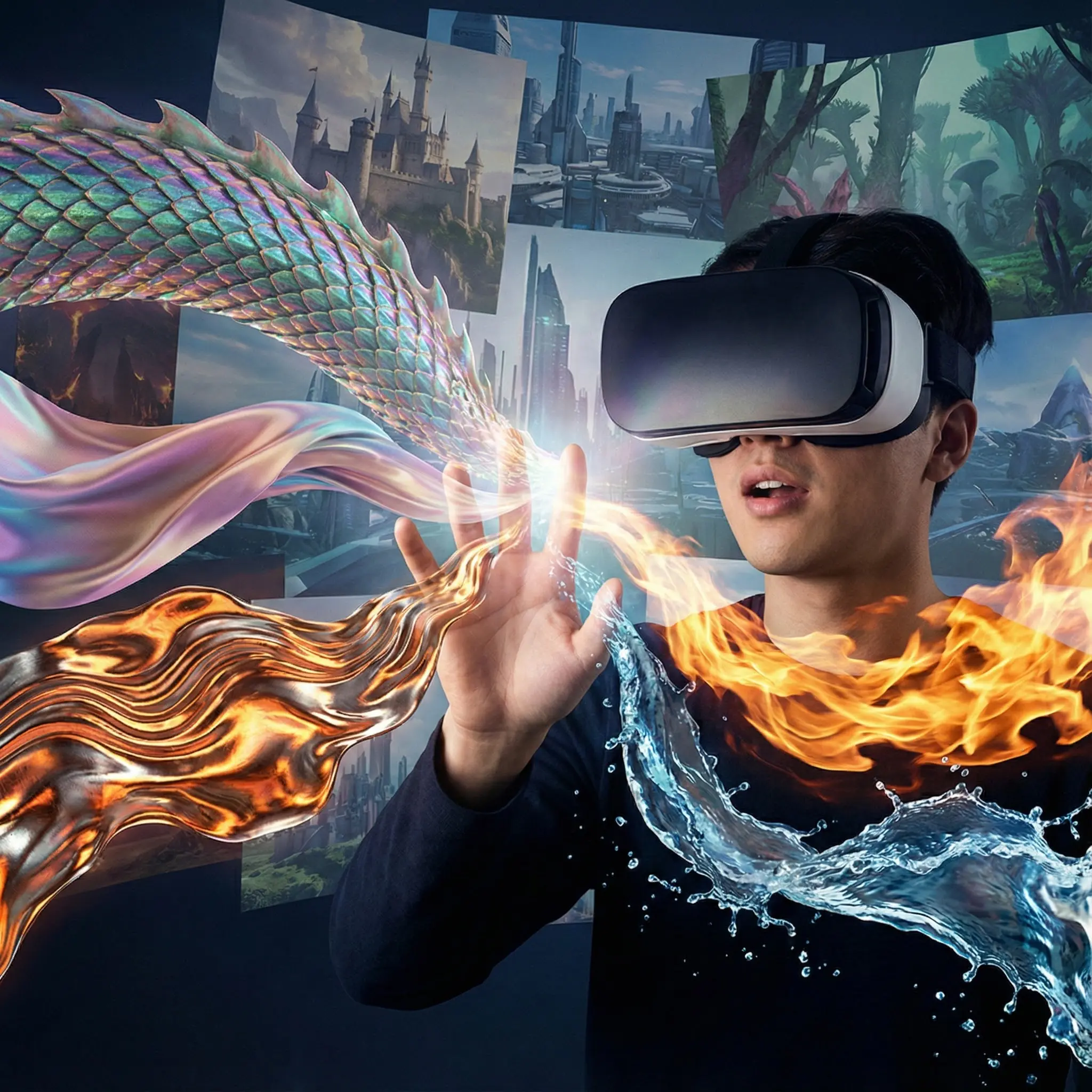

The Touch Revolution Is Here (And It’s About to Blow Your Mind)
The VR Haptic Revolution is definitely here. Think about this: You’re deep in a VR dungeon when a skeleton warrior swings his rusty blade. You raise your shield just in time—and actually feel the bone-rattling impact shoot up your arm. Your heart pounds as you grip your sword tighter, feeling its weight shift as you strike back.
This isn’t some distant dream. This is happening right now.

While everyone’s been obsessing over shinier graphics and faster processors, the real VR revolution has been happening under our fingertips. Haptic technology—basically, making virtual stuff feel real—is quietly becoming the game-changer that separates next-gen VR from everything that came before.
I’ve been tracking this rabbit hole for years, and what’s happening feels like the iPhone moment for touch. Companies are in an all-out race to crack realistic touch, and the results are starting to feel genuinely magical.
Here’s the story of how feeling virtual worlds is about to change gaming forever.

From Controller Buzzes to Full-Body Magic
Remember when your PlayStation controller first vibrated? That little buzz when you crashed your car or took damage felt revolutionary. Well, modern haptic tech makes those old rumbles look like smoke signals compared to IMAX.
Your Whole Body Becomes the Controller
The wildest part isn’t happening in your hands—it’s covering your entire body. Companies like Meta are building haptic suits. These suits can make you feel everything from a gentle breeze to getting punched in the gut.

These aren’t clunky lab experiments anymore. The Haply MinVerse lets you feel tree bark in Skyrim VR. You can also experience the smooth metal hull of a spaceship in Elite Dangerous. Imagine running your hand along a dragon’s scales and actually feeling every ridge and groove.
Your Hands Get Superpowers
But the VR haptic revolution doesn’t end with suits, because gloves are where things get really wild. Some are thinner than credit cards but can make you feel the difference between silk and sandpaper. You can ditch controllers completely and just use your hands—except now you can actually feel what you’re touching.
One company figured out how to create touch sensations using sound waves. You reach out in VR. Invisible pressure makes you feel a virtual button or texture without wearing anything on your hands. It’s basically wizardry.

The Games That Change Everything
This tech isn’t just making current games feel more real—it’s creating completely new types of gameplay that were impossible before.
Detective Work That Actually Feels Like Detective Work
Imagine solving a murder mystery by feeling clues instead of just looking at them. You recognize mysterious substances by texture and find hidden switches by running your fingers along walls. You follow tactile trails that are invisible to your eyes.
Some VR experiences are already doing this. Players feel their way through pitch-black caves. They recognize objects in bags without looking. Players also tell real artifacts from fakes just by weight and texture.

Combat That Doesn’t Suck
Fighting is at the core of the VR Haptic revolution as it is about to get brutal. Instead of wildly swinging controllers, you feel the actual weight of weapons. You experience the shock of blocking attacks. There is satisfaction in landing a perfect hit.
Full-body suits let you feel wind rushing past as you dodge. You feel impacts when you get hit. You can even feel the heat from a dragon’s breath. It transforms button-mashing into actual virtual combat.
Hugs in Cyberspace
Here’s the weirdest part—haptic tech is making virtual hangouts feel human. Soon you’ll actually feel handshakes, high-fives, even hugs from friends in VR. Companies are building systems that send touch between users, making digital meetups feel genuinely intimate.
This isn’t just copying real-world touch. It’s creating new kinds of connection that only exist in virtual spaces.

The Battle for Your Fingertips
The VR giants are taking completely different approaches to haptic domination.
Apple’s Subtle Touch
Apple’s Vision Pro goes minimal—tiny, precise sensations that feel natural rather than obvious. Their bet is on perfect micro-feedback that tricks your brain without announcing itself. You pinch air and feel just enough resistance to believe you’re touching something real.
Meta’s Full-Contact Approach
Meta’s Quest 3 goes the opposite direction with their TruTouch system. Stronger feedback, obvious sensations, controllers that let you feel every punch and slam. Their philosophy: if you’re going to add haptics, make sure players feel them.
It’s basically the difference between a whisper and a shout. Both work, but they create totally different experiences.
The VR Haptic Revolution in numbers
The investment flowing into VR Haptic Revolution tech reveals how massive this is becoming. VR added $13.5 billion to the global economy in 2022. By 2030, it’s projected to add $450.5 billion. Much of that growth is haptic-driven.
But gaming isn’t the only driver. Medical training with realistic touch feedback is one area. Engineers feeling virtual prototypes is another. Remote collaboration, where you can actually shake hands, is also significant. These enterprise uses are pouring serious money into making virtual touch perfect.

AI Makes Touch Smarter
The coolest development isn’t just better hardware—it’s smarter software. AI is learning to personalize haptic feedback for each user. Some people love strong sensations, others prefer subtle cues. AI figures out your preferences and automatically adjusts every touch to feel perfect for you.
Even cooler: predictive haptic rendering. AI anticipates what you’ll need to feel and loads those sensations instantly. No more delay between touching something and feeling it—virtual touch becomes as immediate as real touch.

The Roadblocks Still Ahead
Despite all the excitement, haptic the VR Haptic Revolution faces real challenges.
Timing Is Everything: Real touch is instant. VR touch still has tiny delays that can break the magic. The best systems are close, but not quite there yet.
Your Arms Will Get Tired: Extended haptic gaming can be exhausting in ways regular gaming isn’t. Developers are learning to create meaningful feedback without wearing players out.
Premium Price Tag: The best haptic gear still costs thousands. Basic systems are getting cheaper, but full-body suits remain expensive toys for early adopters.

What’s Coming Next in the VR Haptic Revolution
Several trends point toward a future where virtual touch becomes indistinguishable from real touch:
Wireless Everything: 5G and better wireless tech are making cable-free, full-body haptic experiences practical for home use.
Smaller and Smarter: Haptic tech is shrinking into everyday wearables. Future haptic feedback might be built into smart glasses or lightweight gloves you barely notice.
One Standard to Rule Them All: Industry groups are creating standards so haptic experiences work across different devices. Developers create once, feel everywhere.

The VR Revolution You Can Touch
Haptic technology isn’t just making VR feel more real—it’s enabling completely new digital experiences. When you can feel virtual objects, touch becomes another dimension for gameplay, storytelling, and human connection.
The billions being invested aren’t betting on a gimmick. They’re betting on a fundamental shift in how humans interact with digital worlds.
We’re moving toward a future where the line between physical and digital disappears. Where you feel alien worlds, magical weapons, and virtual embraces. Where games aren’t just played—they’re truly lived.
That future isn’t someday. It’s right now.
The question isn’t whether the VR Haptic Revolution will happen. The question is whether you’re ready to reach out and feel the revolution for yourself.
Sometimes the most important changes are the ones you can actually touch.
If you enjoyed reading about new tech, you might want to check out some Retro stuff as well!


Leave a Reply