
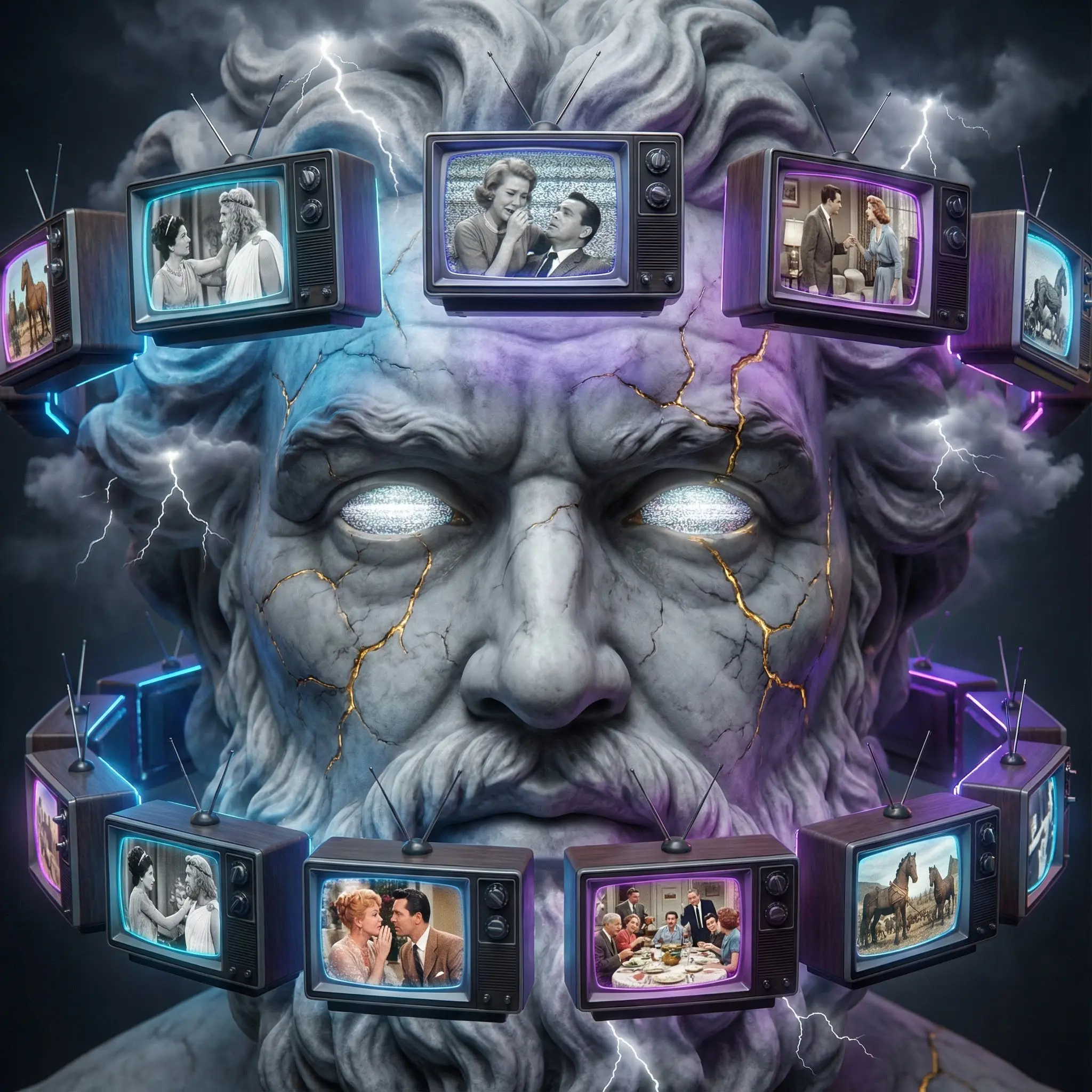

The Divine Drama That Started It All
Zeus disguising himself as a swan to seduce women while dodging his wife’s wrath. Hera orchestrating elaborate revenge plots spanning generations. Aphrodite treating love like a chess game where mortals serve as pawns. It goes without saying: Greek Mythology is definitely the ultimate soap opera.

These divine beings created the blueprint for every dysfunctional family story that followed. The ancient Greeks were writing the manual for compelling character drama thousands of years before television existed.
Greek mythology has exploded in popularity lately, with retellings topping bestseller lists and adaptations dominating streaming platforms. Yet we act like we’ve discovered something revolutionary about these stories. Really, the ancient Greeks mastered compelling drama long before we figured out how to make it ourselves.
The Greek mythology soap opera isn’t just entertainment—it’s a masterclass in human psychology dressed in divine clothing.
The Cast That Would Make Reality TV Producers Weep
Zeus: The Original Messy Patriarch
Zeus wasn’t just the king of gods—he was the prototype for every problematic patriarch in television history. His marriage to Hera had a track record that would make reality TV producers take notes. He was constantly unfaithful. This turned his wife’s jealousy into legendary material.
Imagine this scenario. You are the most powerful being in existence. You decide to spend your time turning into various animals to sleep with mortals. A swan here, a bull there, sometimes just a shower of gold because divine logic doesn’t require human understanding. Zeus took “it’s complicated” to levels Facebook never imagined.

Zeus’s affairs weren’t just about divine horniness, though. Each relationship represented something deeper—power dynamics, the intersection of mortal and divine realms, the consequences of unchecked authority. Every antihero from Tony Soprano to Walter White owes something to Zeus’s complex morality.

Hera: The Queen of Justified Revenge
Before anyone starts with the “jealous wife” trope, let’s get something straight: Hera wasn’t sitting around being petty. She had a husband who publicly humiliated her. At the same time, she was expected to maintain dignity as queen of the gods.

Hera’s revenge plots were elaborate, creative, and honestly? Iconic. She turned Zeus’s lovers into cows and drove his children to madness. She orchestrated divine interventions that would make political strategists envious. Was it healthy? Absolutely not. Was it understandable? Given the circumstances, completely.

What fascinates me about Hera is that she represents something we’re still grappling with. What do you do when you’re trapped in a system that gives you status but strips away your agency? Her rage isn’t just divine wrath—it’s the fury of every person who’s felt powerless in their own life.

The Supporting Cast That Stole Every Scene
The Greek gods were highly emotional and behaved inconsistently, without standard moral codes. This moral flexibility gave us characters like:
Aphrodite: The goddess of love who treated relationships like a chess game, manipulating gods and mortals for her own entertainment. She’s every reality TV producer rolled into one divine being.

Ares and Aphrodite’s Affair: Aphrodite’s husband Hephaestus caught them in bed. He trapped them in a golden net. Then, he invited all the gods to laugh at them. It’s the ancient equivalent of revenge porn, just as problematic then as now.

Persephone and Hades: The original “it’s complicated.” Depending on which version you read, it is either the ultimate Stockholm syndrome story. Alternatively, it is a tale of a young woman finding power in the underworld. Modern retellings have been having a field day with this dynamic.

Plot Twists That Put Netflix to Shame
The Trojan War: When Divine Pettiness Goes Global
The Trojan War didn’t start due to political tensions or resource conflicts. Instead, it began because three goddesses couldn’t agree on who was most beautiful. They decided to let a mortal man judge. A ten-year war erupted because of a divine beauty contest.

Paris chose Aphrodite because she bribed him with Helen of Troy. This choice over Hera and Athena didn’t just start a war. It created narrative templates we still use. Personal choices having massive, unintended consequences? Power corrupting absolutely? Beauty and desire toppling kingdoms? These themes run through everything from political thrillers to relationship dramas.
Divine Justice: When Gods Throw Cosmic Tantrums
Greek gods were flawed like humans, but with cosmic power to act on their worst impulses. When Prometheus stole fire for humanity, Zeus didn’t just punish him. He chained him to a rock and had an eagle eat his liver daily for eternity. When Tantalus served his son to the gods as dinner, they condemned him to eternal hunger and thirst.

These aren’t just cautionary tales. They’re explorations of proportional response. They delve into the nature of justice. They also examine what happens when power operates without accountability.
Why the Greek Mythology Soap Opera Endures
We’re Still Living These Stories
Greek mythology continues influencing everything from brand names like Nike to everyday language through common idioms. Yet it goes deeper than corporate logos and linguistic relics. We keep telling these stories because we’re still living them.
Every political scandal involving powerful figures abusing their positions? That’s Zeus. Every story about a woman’s rage being dismissed as hysteria while legitimate grievances get ignored? That’s Hera. Every tale of someone trying to change their fate only to fulfill it? That’s Oedipus.

The Greek mythology soap opera endures because it doesn’t pretend gods—or people—are all good or all bad. It gives us complex characters dealing with power, desire, family dysfunction, and moral ambiguity. Many stories demand clear heroes and villains. It’s refreshing to find narratives where everyone is complicated yet relatable.
The Representation We Didn’t Know We Needed
Modern retellings are giving voice to characters whose stories were often sidelined in traditional versions. Books like “Circe” and “The Song of Achilles” are taking figures who were footnotes in male heroes’ stories. These books are making them protagonists of their own narratives.

This isn’t just about representation—it’s about recognizing that these myths contain multitudes of untold stories. What was Medusa’s life like before she became the monster? How did Penelope deal with the wait during those twenty years? What would Helen’s version of the Trojan War sound like?

Contemporary adaptations are taking this further, reimagining gods in modern settings while maintaining their essential characteristics. These reinterpretations recognize that mythological characters work in any time period because they represent timeless human traits.
The Ultimate Comfort Watch for Chaotic Times
Greek mythology’s resurgence flourishes during times when the world feels particularly chaotic and unpredictable. We see enduring legacy in superhero narratives that draw on mythic archetypes and expressions rooted in ancient culture. Something deeper is at play, though.

In a world where we’re constantly told to optimize and improve ourselves, there’s something comforting about stories. These stories show everyone as a mess. Gods make terrible decisions, act on their worst impulses, and face consequences often wildly disproportionate to their crimes. It’s chaos, but chaos with narrative structure.
The Greek mythology soap opera tells us that being human—or even divine—means being flawed. It normalizes complexity, celebrates ambiguity, and suggests that maybe the point isn’t to be perfect but to be interesting.
Your Guide to the Divine Drama
Ready to dive into the ultimate soap opera? Here’s where to start your journey through Mount Olympus’s most compelling dysfunction.
For Newcomers: “Circe” offers the perfect entry point. It takes one of mythology’s most misunderstood characters. The book gives her a voice that’s both ancient and completely contemporary. Follow that with “The Song of Achilles,” which transforms warrior epic into achingly beautiful character study.
For Visual Learners: Contemporary adaptations bring these characters into modern contexts. The “Hades” video game portrays the underworld as a dysfunctional family business. Everyone has legitimate grievances. They also have questionable communication skills.

For Deep Divers: Explore “The Greek Myths” by Robert Graves for comprehensive source material. Then move to academic takes like “The Uses of Greek Mythology.” This will help you understand why these stories maintain relevance across millennia.

For Content Creators: Stephen Fry’s mythology trilogy provides comprehensive coverage with brilliant wit, perfect for understanding the broader narrative connections.

The Final Verdict: Why Greek Gods Win at Drama
Greek mythology had as much scheming and fighting as any contemporary drama. Children fought parents. Spouses deceived each other. Siblings were locked in eternal rivalry. What sets it apart? The stakes were literally cosmic.
When Zeus has a bad day, mortals suffer. If Persephone gets kidnapped, winter happens. When Pandora opens her box, evil enters the world. Personal becomes universal on a scale that makes our current narratives look intimate by comparison.

The Greek mythology soap opera succeeds because it recognizes something fundamental: individual choices have collective consequences. Personal relationships shape worlds. Family dysfunction can alter the course of history.
In an era that often feels mythologically chaotic, perhaps these ancient stories are exactly what we need. They feature beautiful, terrible, deeply flawed characters getting everything wrong in spectacular ways. Greek gods never existed, but their relationships, flaws, and struggles feel more authentic than most modern storytelling.

Next time someone dismisses mythology as “just old stories,” remind them: these are the original character studies. They were written by people who understood that compelling drama comes from personality, not plot. Greeks didn’t just create gods—they created the ultimate dysfunctional family, complete with enough material to fuel storytelling for eternity.
For more Universe mythology deep-dives, explore our stories about:


Leave a Reply