

The Mirror That Finally Shows Us All
Change sometimes arrives so quietly. You don’t realize the world shifted until you look back. That’s when you see the before and after. That’s what’s been happening with Black superheroes. This change occurs not just in comics and movies, but also in the collective imagination of what heroism looks like.
I have observed this transformation across communities. It spans from comic book shops in Atlanta to movie theaters in Oakland. What I’m seeing isn’t just better representation. It’s a fundamental rewiring of who the main character is in stories. These stories shape how we see ourselves and each other.

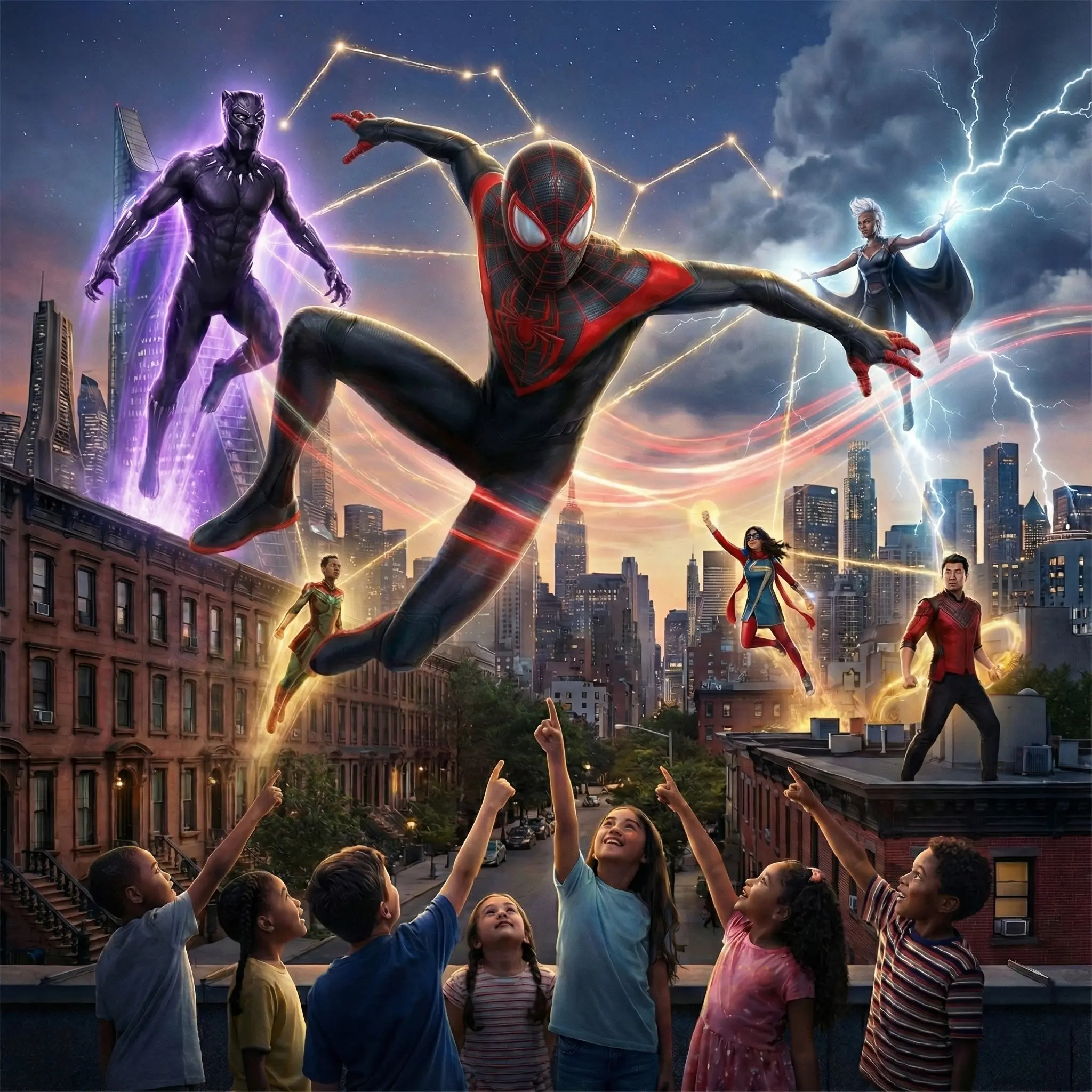
When Sam Wilson picks up Captain America’s shield, it’s more than a character moment. Miles Morales swings through Brooklyn speaking Spanish to his mom, it’s a significant event. T’Challa rules Wakanda with technological brilliance, it’s impactful. They’re cultural declarations. The future of heroism looks different than its past. This difference makes everyone’s story more powerful.
This matters because representation is never just about seeing yourself on screen. It’s about expanding the universe of possibility for every child who grows up believing they can change the world. And right now, that universe is getting bigger, more beautiful, and more real than ever before.

From Exception to Expectation: How We Got Here
We are witnessing the evolution from heroes who happen to be Black. Now, we have heroes whose Blackness informs their strength. It shapes their perspective and their approach to saving the world. That shift changes everything.
The journey from tokenism to transformation tells a story about more than comics. It tells a story about how change happens when communities refuse to accept “good enough.”
The Pioneers Who Opened Doors
When Black Panther debuted in 1966, T’Challa wasn’t just the first Black superhero in mainstream comics—he was proof of concept. Here was a character whose power came from his heritage, not despite it. A king, a scientist, a protector whose Blackness wasn’t his weakness to overcome but his strength to embrace.
The creation of these early characters happened during the Civil Rights Movement, and that timing wasn’t coincidental. Comics reflected the social upheaval around them. They created space for heroes who looked like the people fighting for justice in real life.
Sam Wilson followed as the Falcon. He brought something new to superhero storytelling. His background in social work informed his approach to heroism. Even as a sidekick, Sam represented the idea that saving people required understanding people. This perspective would later make him a natural successor to Captain America.
The Learning Curve of Authentic Storytelling
The early decades brought characters who were groundbreaking simply by existing. It also limited by creators who didn’t always understand the communities they were representing. Characters with names like “Black Lightning” and “Power Man” reflected good intentions filtered through incomplete understanding.

What’s beautiful about this period is how these characters evolved as their creators—and the industry—learned to tell more authentic stories. Luke Cage transformed from a Blaxploitation-influenced character into a complex family man and community leader. The evolution happened because communities spoke up about what authentic representation looked like.
This is how progress works: imperfect beginnings, community feedback, course corrections, and gradual improvement.
The Moment When Everything Clicked
The breakthrough came when creators realized that authentic Black characters couldn’t be white characters with different skin tones. They needed to be people whose cultural backgrounds shaped their worldview and their approach to heroism.


Miles Morales represented this realization perfectly. Instead of making him an orphan like Peter Parker, his creators gave him loving parents who speak Spanish. They worry about him in ways that feel real to anyone from a tight-knit family. Instead of generic teenage problems, Miles navigates code-switching between his neighborhood and his fancy private school.
This specificity didn’t limit Miles’ appeal. It made him more relatable to broader audiences. Authenticity always resonates more than generic universality.
Miles Morales: The Power of Authentic Dreams
Let’s discuss the outcome of creating a character. This character not only stands for diversity but also embodies the full complexity of modern identity.

A Hero Shaped by Community
Miles Morales changed the game because his creators understood something crucial: heroes aren’t created in isolation. They’re shaped by families, neighborhoods, languages, and cultures that give both challenges and strengths.
Miles speaks Spanish with his mom. He navigates between his Brooklyn neighborhood and his privileged school. He grapples with living up to the Spider-Man legacy while forging his own path. These aren’t diversity checkboxes. They’re the foundation of a character. His heroism emerges from his specific experience of being young, gifted, and Black and Latino in America.

The genius of Miles is that his background doesn’t limit his story—it enriches it. His bilingual household gives him communication skills that help him connect with different communities. His experience code-switching between different social environments makes him adaptable in ways that serve him as Spider-Man.
The Spider-Verse Effect: When Authenticity Meets Artistry
Into the Spider-Verse succeeded by embracing Miles’ cultural background. This wasn’t something to minimize for broader appeal. It was the secret ingredient that made his story special. The film leaned into Brooklyn culture and hip-hop aesthetics. Family dynamics felt real, as they were rooted in authentic community experiences.
The movie’s visual style itself reflected this authenticity. It incorporated graffiti art, urban landscapes, and animation techniques. These elements felt connected to the communities that shaped Miles’ character. This wasn’t diversity as decoration—it was diversity as creative inspiration.
The film’s success proved something powerful: audiences don’t want sanitized characters who are anyone. They want specific characters who feel like real people. These characters should have real backgrounds and real connections to communities that exist in the world.
The Ripple Effect Across Generations
What moves me most about Miles’ impact is watching how he’s changed the conversation for young people. Kids who see Miles don’t just see representation—they see possibility. They see a hero who sounds like their family. He navigates challenges they recognize and saves the world without losing himself in the process.
This matters because representation isn’t just about seeing yourself—it’s about seeing yourself as capable of greatness. When young people see heroes who share their backgrounds, it expands their sense of what they can achieve. These heroes succeed on their own terms.

Sam Wilson: Carrying the Shield, Expanding the Symbol
The transition from Steve Rogers to Sam Wilson as Captain America is more than just a change in characters. It signifies a meditation on how symbols evolve. These changes show expanding ideas of who can embody national ideals.

The Weight of Inherited Symbols
When Sam Wilson takes up Captain America’s shield, he’s not just inheriting a weapon. He’s inheriting a symbol. This symbol has meant different things to different communities. For some, Captain America symbolizes American ideals at their best. For others, he stands for ideals that have too often excluded their experiences.
Sam’s unique position is that he understands both perspectives. He’s served his country while also experiencing how that country hasn’t always served people who look like him. This dual consciousness makes his Captain America more complex and more honest than previous versions.
His background as a counselor adds another layer to his heroism. Sam understands that saving people often requires listening to them. It involves understanding their experiences and addressing root causes rather than just symptoms. This approach makes him a different Captain America—one whose strength comes from empathy as much as courage.
Redefining Strength Through Vulnerability
What makes Sam Wilson’s Captain America particularly powerful is his humanity. Without the super-soldier serum, every fight is a risk. Every victory is earned through skill and determination. Enhanced abilities do not contribute to his success.
This vulnerability doesn’t make him weaker—it makes him more relatable and more inspiring. Sam Wilson saves the day by choosing to put himself at risk for others. He is not heroic because of genetic programming.
His heroism feels achievable in ways that supersoldier heroism doesn’t. Young people can see themselves in Sam’s courage. They are inspired by his community focus. They admire his commitment to using whatever platform he has to lift others up.
The Creator Renaissance: Authentic Voices, Authentic Stories
The most significant shift in Black superhero representation is happening behind the scenes. Black creators are finally getting opportunities to tell their own stories. They can now express themselves in their own voices.
The Historical Context of Exclusion
For decades, the comic industry operated with a diversity problem that went deeper than character representation. Black artists and writers were often relegated to background roles. They worked “behind the scenes” without public recognition. Meanwhile, white creators shaped how Black characters were portrayed.
This meant that even well-intentioned Black characters were often filtered through perspectives that didn’t fully understand the communities being represented. The result was characters who looked diverse but didn’t always feel authentic to the experiences they were supposed to represent.

The Independent Movement
Mainstream publishers slowly recognized the need for authentic voices. Meanwhile, independent creators were building their own platforms. They were telling their own stories. Projects like Milestone Comics created characters and narratives that felt genuine because they emerged from the communities they represented.
Black creators can build audiences and drive commercial success. These independent voices proved this when given the creative freedom to tell authentic stories. They also demonstrated that representation worked best when it came from authentic understanding rather than external interpretation.

The Mainstream Integration
Now, major publishers are recognizing what independent creators proved: authentic voices create better stories. Black writers and artists are being hired to work on more than just Black characters. They bring their perspectives to entire franchises and universe-building projects.
The result is characters and stories that feel real because they’re rooted in genuine cultural understanding. When Black creators write Black characters, those characters become people rather than symbols, individuals rather than representatives.
This shift matters. It allows the next generation of Black superheroes to be created by people who truly understand the communities. They understand the experiences they are drawing from. That’s how representation evolves from good intentions to genuine authenticity.

The Global Conversation: How Local Stories Create Universal Connection
One of the most encouraging developments is seeing the impact of authentic Black American superhero representation. It has inspired creators worldwide to tell their own culturally specific stories.
The Wakanda Blueprint
Black Panther‘s success created a template for how marginalized cultures could be represented in mainstream entertainment. The film’s portrayal of Wakanda was technologically advanced and culturally rich. It revealed to creators worldwide that they didn’t have to choose between authenticity and commercial appeal.

The movie’s global success proved that audiences were hungry for stories that centered non-white perspectives and experiences. This created space for creators from other backgrounds to develop their own culturally specific superhero narratives.
The Multiplication Effect
Miles Morales’ success inspired the creation of Spider-People from various cultural backgrounds. Brazilian Spider-Man and Spider-Man India are examples. They reflect their own local communities while participating in the broader Spider-Verse mythology.
This multiplication effect shows how authentic representation creates space for more authentic representation. When one community sees itself reflected authentically, it encourages other communities to demand the same level of specificity and respect.
The Authenticity Standard
What’s emerging is a new standard for representation that prioritizes authenticity over broad appeal. Creators worldwide are learning that the path to universal connection runs through specific, culturally grounded storytelling. This is more effective than using generic characters designed to offend no one.
This standard benefits everyone because authentic stories are simply more interesting than sanitized ones. When creators are free to draw from their own cultural experiences, they create richer narratives. These stories resonate across cultural boundaries because of their connection to community knowledge.

The Economic Reality: When Representation Meets Revenue
The financial success of diverse superhero content has fundamentally changed how the entertainment industry thinks about representation and market viability.
The Numbers That Changed Minds
Black Panther earned over $1.3 billion worldwide, making it one of the highest-grossing films of all time. The Spider-Verse films have earned nearly $1.1 billion combined. These aren’t niche successes—they’re mainstream blockbusters that happened to center Black experiences.
These numbers forced industry executives to confront their assumptions about what audiences wanted. The success demonstrated that diverse stories didn’t limit box office potential. They expanded it by reaching audiences that had been historically underserved.
The Audience Revelation
What the industry discovered is that audiences were hungry for authentic representation and tired of generic characters designed by committee. People wanted heroes who felt like real people with specific backgrounds, cultural connections, and community ties.
This hunger existed across demographic lines. The success of Black superhero content came from broad audience appeal, not just support from Black communities. Authenticity, it turned out, was a better business strategy than bland universality.

The Investment Shift
Success creates momentum. The proven profitability of diverse superhero content has led to increased investment in projects that center underrepresented communities and perspectives. Studios are greenlighting projects that would have been considered “too risky” just a few years ago.
This investment creates opportunities for emerging creators and establishes representation as a commercial priority rather than just a moral obligation. When diversity drives profits, it becomes sustainable rather than dependent on goodwill.
The Ripple Effects: How Superhero Representation Changes Everything Else
The impact of authentic Black superhero representation extends far beyond entertainment into education, community building, and social change.
The Classroom Connection
Teachers report using characters like Miles Morales and T’Challa as entry points for discussions about identity, history, and social justice. These characters provide accessible frameworks for exploring complex topics that might be difficult to approach through traditional educational materials.
When students see themselves reflected in heroic narratives, they become more engaged with learning. They are more likely to see themselves as capable of academic and personal success. Representation becomes a tool for educational empowerment.

The Community Building Effect
Black superhero representation has strengthened community connections by providing shared cultural touchstones that bridge generational and geographic divides. Families discuss these characters, communities organize around them, and shared enthusiasm creates bonds that extend beyond entertainment.
Comic book shops, conventions, and fan communities have become more diverse and welcoming as authentic representation has attracted broader audiences. The culture around superhero fandom has evolved to be more inclusive and community-focused.

The Social Justice Bridge
Authentic superhero representation is crucial. It has created accessible entry points for discussions about social justice. It also addresses systemic inequality and community empowerment. These characters embody values of service, protection, and community uplift that translate into real-world engagement.
Young people who connect with these characters often become more interested in civic participation, community service, and social activism. Entertainment becomes a pathway to engagement rather than an escape from responsibility.
The Challenges That Keep Us Honest
Despite significant progress, meaningful challenges remain that require continued attention and community vigilance.
The Authenticity Expectation
One ongoing challenge is the pressure on Black characters to be perfect representatives rather than complex individuals. Black superheroes often can’t be flawed or controversial without facing criticism that white characters don’t encounter.
This pressure toward perfection can limit storytelling possibilities and create characters who feel more like symbols than people. Real authenticity requires allowing Black characters to be human—complicated, imperfect, and specific to their own experiences.

The Supporting Character Trap
Many Black superheroes still exist primarily in relation to white protagonists. They often serve as sidekicks, successors, or team members. They are not central figures in their own original mythologies.
Breaking this pattern requires creating new universes and supporting casts centered around Black characters, not just diversifying existing white-centered narratives. The goal should be original stories rather than just inclusive versions of existing stories.


The Corporate Comfort Zone
Studios are now more open to approving diverse projects. However, they often still play it safe. They ensure these projects hit familiar beats and don’t challenge audiences too much.
Real progress requires taking creative risks and trusting audiences to engage with stories that might be outside their immediate experience. Authenticity sometimes requires discomfort, and that’s not always compatible with corporate risk management.
The Future We’re Building Together
Looking ahead, several trends suggest that Black superhero representation will continue evolving. This evolution will benefit entire communities. It will also positively impact the broader culture.
The Creator Ownership Movement
More Black creators are developing their own intellectual properties rather than working on existing characters owned by major corporations. This shift toward creator-owned content allows for complete creative control and authentic storytelling without corporate constraints.
Creator-owned projects can take risks that corporate-owned characters cannot. They explore themes and perspectives. These might be considered too specific or challenging for mainstream properties.
The Technology Democratization
Digital publishing platforms and social media are making it easier for independent creators to reach audiences directly. These platforms bypass traditional gatekeepers. Historically, such gatekeepers have limited diverse representation.
This democratization means that authentic voices can build audiences. They can prove market viability before seeking traditional publishing deals. This fundamentally changes the power dynamics of the industry.
The Story We’re Writing Together
The transformation of Black superhero representation isn’t just about better movies and comics. It’s about collective storytelling. This storytelling shapes how we see ourselves and each other.
Sam Wilson carrying Captain America’s shield isn’t just character development—it’s cultural evolution. Miles Morales swinging through Brooklyn isn’t just good animation—it’s community celebration made visible. T’Challa ruling Wakanda isn’t just fantasy—it’s aspiration given form.
These characters matter. They prove that heroism emerges from community. Strength comes from embracing rather than hiding identity. The future of storytelling is more interesting when it includes more voices.

The success of authentic Black superhero representation proves something important
Communities of color have always known this. The mainstream is finally learning it too. Specificity creates connection. Authenticity drives engagement. Diverse stories make the entire narrative landscape richer.
As we move forward, the challenge isn’t just maintaining this progress but expanding it. We must support Black creators who want to tell their own stories. We must also demand authentic representation that goes beyond surface-level diversity. Inclusion isn’t a favor to marginalized communities. It’s a benefit to everyone.
The future of superheroes looks different than their past because the future of everything looks different than the past. It’s more authentic, more connected to real communities, and more honest about the complexity of identity and belonging.
If that transformation makes some people uncomfortable, well—that discomfort might be necessary. It may be what we need. We need to keep pushing toward a future. In that future, every child can see themselves as the hero of their own story.
That’s what this is really about. We are expanding the universe of possibility. Heroism isn’t limited by background. American ideals can be embodied by anyone. The stories we tell reflect the beautiful complexity of the communities we’re actually living in.
The most powerful stories aren’t the ones that make us comfortable. They’re the ones that help us grow. They push us to become who we’re meant to be.
Black Panther, Luke Cage and all related characters, names, marks, emblems and images are trademarks of Marvel Comics. Batman, Superman, Black Lightning, Green Lantern and all related characters, names, marks, emblems and images are trademarks of DC Comics. This content is transformative commentary and review material created by Fandoria and is not affiliated with or endorsed by the companies mentioned.
More stories like this one on Fandoria:


Leave a Reply