
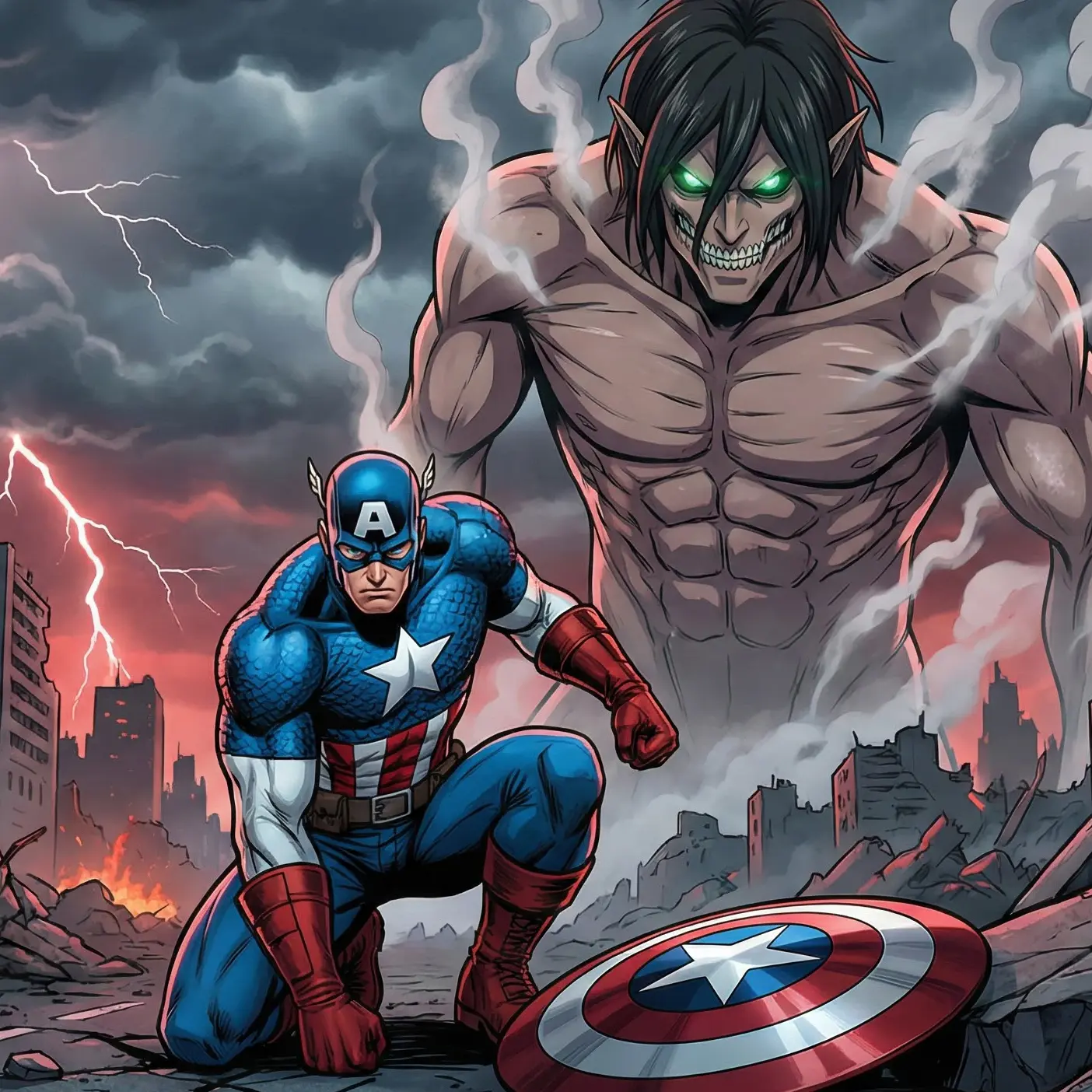

Marvel just announced something that should terrify every Western comic executive and make every anime fan smug as hell.
The Silent Möbius x Avengers crossover isn’t Marvel graciously collaborating with Eastern creators. It’s Marvel frantically copying homework from the kids who actually figured out how to make heroes heroic.
Think about it. The biggest superhero powerhouse in history just handed their billion-dollar characters over to a manga creator whose cyberpunk series from the ’90s did things with female characters that Marvel still can’t manage today. Captain America is about to learn what actual character development looks like, and honestly? it’s about time someone showed them how stories actually work.

Marvel Already Proved They Can’t Keep Up
Remember when Attack on Titan made every superhero movie feel like a Saturday morning cartoon? Suddenly, audiences had tasted what happens when heroes face genuine moral complexity, when victory requires unbearable sacrifice, when the “good guys” might actually be wrong about everything.
Marvel tried to respond with their own dark turns. Civil War split the Avengers. Infinity War killed half the universe. But even their “mature” storytelling felt sanitized compared to Eren Yeager watching his friends die for choices he made.
Marvel learned the painful truth: you can’t just add darkness to a formula built for simplicity. Attack on Titan works because moral ambiguity isn’t sprinkled on top of heroic archetypes. It’s baked into the storytelling DNA from day one.
Every Marvel hero gets to be morally complex for exactly one movie before snapping back to their baseline personality. Every anime protagonist lives with their choices forever, growing and breaking and becoming someone completely different by the end. That’s the difference between real character evolution and superficial change.

The Code That Changed Everything
Anime cracked a storytelling code that Western comics spent 80 years fumbling around for. The secret isn’t bigger explosions or darker themes. It’s treating audiences like they can handle complexity without guidance.
Watch how anime handles failure. Naruto doesn’t just lose fights and bounce back stronger. He fails to save people, watches his mentor die because of his mistakes, and carries that weight into every future decision. The failure becomes part of who he is, not just an obstacle he overcame.

Marvel heroes fail too, but their failures get resolved or reversed. Tony Stark’s trauma drives his character development until the exact moment it becomes inconvenient for the next movie’s plot. Then suddenly he’s fine, making quips and saving the day without psychological baggage.
Anime treats emotional consequences like physics. What goes up must come down, and what breaks stays broken unless you do the hard work to heal it. Marvel treats emotional consequences like weather. Sometimes it rains drama, but eventually the sun comes out and everything’s fine again.
This explains why we anime fans keep asking Western entertainment to grow up. We’ve seen what sophisticated character work looks like. We know heroes can be complex without being grimdark, emotional without being weak, morally gray without being evil.

Silent Möbius Did What Marvel Couldn’t
This crossover hits Marvel where it hurts most: Silent Möbius solved problems in 1991 that Marvel is still struggling with today.
All-female tactical team with no romantic drama? Check. Horror elements that trust audiences to handle genuinely disturbing content? Check. Character relationships that develop organically through shared trauma rather than plot convenience? Check. Women written as complete human beings rather than Strong Female Characters™? Double check.
Kia Asamiya created a template for ensemble storytelling that Marvel has been reverse-engineering for decades. Every time they try to make a female-led team work, they stumble over the same issues that Silent Möbius navigated effortlessly thirty years ago.
The Avengers work because they started as a men’s club that gradually added women. Silent Möbius worked because it began with the assumption that women could carry a story without male approval or romantic subplot justification.
Marvel’s partnership with Asamiya isn’t just artistic collaboration. It’s admitting they need lessons in doing what anime has always done naturally.

Anime Trained Audiences Marvel Couldn’t Reach
Every Marvel executive should study how anime built its global audience. They didn’t dumb down content for Western markets or sanitize violence for broader appeal. They trusted that good storytelling translates across cultures without losing its edge.
Death Note became a worldwide phenomenon despite requiring viewers to sympathize with a serial killer protagonist. Fullmetal Alchemist built emotional investment through slow-burn character relationships and moral philosophy discussions. Attack on Titan asked audiences to question everything they thought they knew about heroes and villains.
These series succeeded globally not despite their complexity but because of it. Audiences were hungry for entertainment that respected their intelligence and emotional sophistication. Marvel was still making movies where the biggest character development challenge was whether Thor learned to be worthy of his hammer.
The gap became impossible to ignore when anime-influenced Western properties started outperforming traditional superhero content. Castlevania, Arcane, Love Death + Robots. Each proved that Western audiences would embrace animated storytelling with anime sensibilities over sanitized superhero adventures.
Marvel’s crossover announcement is basically admitting defeat. They’ve spent decades trying to reverse-engineer what makes anime compelling, and now they’re just asking anime creators to show them how it’s done.


The Representation Lesson Marvel Needed
We’ve been waiting for this lesson for decades. Silent Möbius accomplished something Marvel is still learning: creating diverse characters who feel like people instead of demographic checkboxes.
The series featured women from different cultural backgrounds working together without the story stopping to explain why diversity matters or how groundbreaking their team composition was. The characters’ different perspectives shaped how they approached problems and related to each other, but their diversity felt natural rather than performative.
For those of us who’ve watched Marvel try to catch up, their pattern is frustratingly familiar. They introduce diverse characters with fanfare, explain their cultural significance, and then struggle to give them meaningful story arcs that don’t revolve around their identity categories. They’re getting better, but they’re still learning lessons that anime mastered decades ago.
Anime’s approach to representation has always been more organic because it emerged from different cultural assumptions about storytelling. Eastern narratives often center community dynamics and collective responsibility in ways that naturally highlight how different storytelling approaches create stronger narratives.
Marvel’s individual-focused heroic tradition makes it harder to integrate diverse voices without falling into tokenism or making representation feel like an afterthought. Their crossover with Eastern creators represents recognition that they need different narrative frameworks to tell truly inclusive stories.


Global Storytelling Requires Global Perspectives
Marvel’s anime partnerships signal something bigger than comic book business strategy. They represent American entertainment acknowledging that global audiences demand global storytelling sensibilities.
Audiences shaped by anime, K-dramas, and international cinema bring different expectations about pacing, character development, and emotional authenticity. They can spot Hollywood formula from miles away and increasingly choose content that offers genuine cultural exchange over superficial diversity.

The success of Parasite, Squid Game, and other international properties proved that American audiences will embrace foreign storytelling approaches when they’re presented authentically. Marvel’s crossover strategy acknowledges this shift in audience sophistication.
Marvel finally stopped expecting global fans to settle for the same old American superhero formula and started meeting audiences where they actually are. They’re learning that authentic cultural collaboration creates stronger content than trying to force Western storytelling frameworks on international markets.
This evolution extends beyond entertainment into broader cultural understanding. When Marvel characters operate within anime narrative frameworks, they model the kind of cultural bridge-building that creates mutual understanding rather than one-sided influence.

Passionate Communities Drive Change
Fan communities forced this evolution by consistently choosing anime over Western alternatives when both were available. They demonstrated through viewing habits, merchandise purchases, and social media engagement that they preferred sophisticated storytelling over familiar franchises.
Reddit threads comparing anime character development to Marvel’s approach. TikTok videos explaining why anime villains feel more compelling than superhero antagonists. Discord servers dedicated to analyzing how anime handles themes that Western comics avoid.
These communities created persistent pressure for Western entertainment to evolve. They articulated specific critiques and pointed toward specific solutions. Marvel’s crossover announcement represents their recognition that fighting this community pressure was less productive than learning from it.

The passionate engagement that anime generates comes from storytelling that treats audiences as active participants rather than passive consumers. Fans invest emotionally in characters who grow and change because that investment feels meaningful over time.
What can fandom teach us about society today? That audiences are way smarter than executives assumed. That global communities will choose authenticity over familiarity every time. That the future belongs to creators who respect their audience’s intelligence.
Marvel is learning to create that same level of emotional investment by adopting narrative approaches that reward long-term audience commitment rather than just delivering immediate gratification.

The Future Demands Cultural Fluency
Marvel’s surrender to anime storytelling represents the future of global entertainment. Success increasingly requires cultural fluency across Eastern and Western narrative traditions rather than dominance by either approach.
Audiences want entertainment that reflects the complexity and interconnectedness of their actual lives. They’ve grown beyond simple good-versus-evil frameworks into appreciation for morally complex characters navigating imperfect systems.

This evolution creates opportunities for creators who can authentically bridge different storytelling traditions. Marvel’s partnership with anime creators establishes a template for cultural collaboration that other entertainment companies will likely adopt.
The global success of this approach could normalize cultural exchange in entertainment, creating more opportunities for diverse voices to influence mainstream Western content through authentic partnership rather than superficial inclusion.
Future entertainment success will depend on understanding that audiences can handle complexity, appreciate cultural differences, and reward authentic collaboration over performative diversity.

Marvel didn’t just announce a crossover. They announced that the superhero powerhouse built on American storytelling supremacy needs help from traditions that always treated audiences with greater respect.
The anime influence isn’t going anywhere. It’s only getting stronger. And every Western creator who adapts to this reality will create better, more emotionally sophisticated content as a result.
The students have become the teachers. Marvel is finally ready to learn.


Leave a Reply