
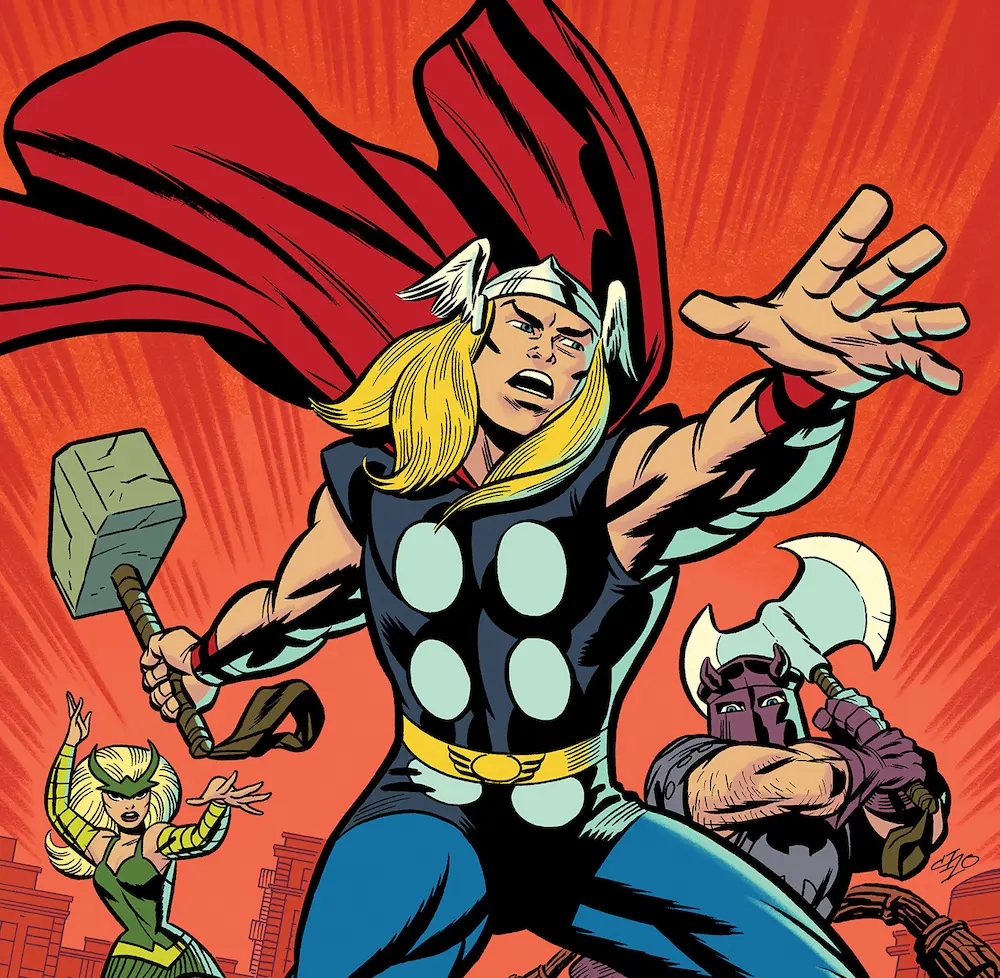

When Marvel Made Thor Better Than the Vikings Did
Marvel’s Thor stands as one of the most successful mythological adaptations in modern entertainment. Yet for all his thunderous popularity, Marvel Thor Norse mythology connections are surprisingly thin.
The blonde god throwing hammers across cosmic battlefields while cracking jokes? That’s not traditional Norse mythology. That’s Hollywood magic transforming an ancient deity into a relatable superhero. Marvel took one of history’s most famous mythological figures and essentially rewrote him from scratch.

The result changed everything. Marvel created a Thor more compelling than his ancient counterpart, more culturally relevant, and infinitely more emotionally engaging. This isn’t just adaptation. It’s complete reinvention. It somehow captures what mythology should do. It tosses historical accuracy aside like Mjolnir returning to its owner’s hand.
Marvel’s Great Thor Makeover Changed Everything
The Look That Launched a Franchise
Traditional Norse mythology described Thor with red hair and a full red beard. Picture a Viking lumberjack aesthetic. Marvel gave audiences Chris Hemsworth looking like he stepped from a Scandinavian tourism poster.

Jack Kirby and Stan Lee considered keeping the red hair but ultimately chose a golden god appearance instead. The decision reflected deeper changes in how we understand heroism. Norse Thor looked like a warrior because Vikings valued strength above all. Marvel Thor looks like an idealized protector because modern audiences need heroes who represent protection rather than conquest.
This aesthetic choice wasn’t just about making Thor more attractive. Visual changes reflected fundamental shifts in storytelling approach. The golden-haired god could share screen time with Iron Man and Captain America believably. He didn’t seem like a Renaissance fair escapee.

Family Drama That Never Existed
Marvel Thor Norse mythology differences become most obvious in family relationships. The MCU presents Loki as Thor’s adopted brother. This relationship offers endless family therapy material. It also creates some of Marvel’s most emotionally devastating moments.

Traditional Norse mythology tells a different story. Loki was Odin’s blood brother, not Thor’s sibling. The two gods were more like drinking companions who occasionally adventured together. Less “tortured family dynamics,” more “friends who sometimes fight but ultimately support each other.”


Marvel transformed casual mythological acquaintances into complex family relationships. The result? One of cinema’s most compelling sibling rivalries, built on complete mythological fiction. Yet this fictional foundation provides emotional layers the original stories never delivered.

The Worthiness Revolution
Marvel’s most significant innovation might be the worthiness concept. Only those deemed worthy can lift Mjolnir, creating iconic moments throughout comics and films. Captain America barely moving the hammer in Age of Ultron. Jane Foster becoming the Mighty Thor. These scenes represent peak emotional storytelling.
Norse mythology handled Mjolnir differently. Anyone strong enough could theoretically wield the hammer—if they remembered essential accessories. Thor needed iron gloves called Járngreipr and a strength-doubling belt to safely handle his weapon. Mjolnir came with mandatory safety equipment like some cosmic workplace manual.

No moral judgment existed and there were little character development opportunities. No tear-jerking self-discovery moments. Just “be really strong and don’t forget your work gloves.”
Marvel asked a different question: “What if the hammer measured heroism?” Thus, one of modern superhero fiction’s most powerful storytelling devices was born. Worthiness allows character growth, redemption arcs, and goosebump moments when unexpected heroes prove themselves.

Why Marvel’s Changes Actually Work Better
Creating Relatable Gods
Original Norse Thor was essentially a cosmic bully who killed giants for sport. The kind of deity who’d start bar fights for entertainment, then act surprised when someone got hurt. Marvel looked at this character profile and saw opportunity.

Instead of a perfect warrior solving everything with violence, they created an arrogant prince learning humility. Suddenly, audiences had a character capable of growth, change, and actual emotional stakes beyond “defeat the bad guys.”
Marvel Thor Norse mythology approach starts with flawed protagonists earning worthiness—literally and figuratively. Watching perfect gods win effortlessly is boring. Watching characters struggle to become worthy heroes creates appointment television.
This approach makes Thor’s relationship with power more interesting. Original Thor was born worthy and stayed worthy. Marvel Thor gets cast out, loses powers, and must prove himself repeatedly. That’s character development audiences can emotionally invest in.

Building Better Modern Mythology
Marvel Thor movies loosely base themselves on mythology while adding fantastical elements fitting the Marvel universe. This approach enables consistent world-building across interconnected stories spanning decades.
Norse mythology was never designed as coherent, interconnected narrative. Stories collected over centuries by different people served different purposes. Marvel took raw materials and built something functioning as modern mythology—complete with consistent rules, character development, and overarching narratives.
The Marvel approach prioritizes emotional truth over historical accuracy. Mythology isn’t about perfect historical recreation—it’s about helping audiences understand themselves and their world.
The Social Media God
Marvel’s Thor has done more for Norse mythology’s cultural relevance than anything in the past century. Before the MCU, most people’s mythology knowledge came from Wagner operas and half-remembered college courses.
Now Norse mythology trends on social media. Children know Odin’s name. People use “Ragnarok” in casual conversation. Marvel Thor Norse mythology phenomenon created pipelines from pop culture interest to historical learning. Hollywood versions might come first, but that beats no exposure at all.

Marvel’s Thor spawned countless memes, extensive fanfiction, and museum-quality cosplay. Original Norse Thor, despite mythological significance, never inspired anyone to write character analysis essays or debate cosmic power rankings.
The Thor That Matters Now
Fandom Over Footnotes
For most people under 40, Thor means Marvel first and Norse mythology second, if at all. That’s not cultural tragedy—that’s how culture evolves.
People engaging with Marvel Thor Norse mythology differences might only know Marvel’s version. Yet they’re still engaging with mythological concepts through different lenses. They understand worthiness, power, responsibility, and cosmic justice. They learned from Chris Hemsworth instead of ancient sagas, and that’s perfectly acceptable.

Cultural flow moves from Marvel to mythology rather than the reverse. Marvel’s Thor serves the same function mythological Thor served Vikings. He represents ideals and tells stories about power and responsibility. He provides frameworks for understanding heroism. The medium changed; the purpose remains.
Creating New Cultural Traditions
Marvel’s Thor has entered general cultural vocabulary. People reference being “worthy” of Mjolnir in contexts having nothing to do with comics or movies. That’s mythology truly taking cultural root.
The worthiness concept alone represents modern myth-making at its finest. Stories help us think about different concepts and create meaning. Marvel’s Thor provides contemporary frameworks for discussing redemption, family dysfunction, responsibility, and power’s proper use.
Understanding Both Versions of Thor
For Marvel-First Fans
Curious about original Norse stories? Start with Neil Gaiman’s “Norse Mythology” for accessible introduction to actual myths. Gaiman makes ancient stories feel immediate and relevant without sacrificing essential character.
For deeper exploration, Snorri Sturluson’s “The Prose Edda” contains many original Thor stories, though they differ significantly from expectations.

For Mythology Enthusiasts
Know your Norse mythology but curious about Marvel’s interpretation? “Thor: The Mighty Avenger” collections show Marvel’s initial character adaptation, tracing evolution from there.
MCU films take even more liberties but remain worth watching to understand the character’s contemporary cultural evolution.

For Everyone Else
Both Thor versions offer value. Norse originals show how ancient peoples understood strength, protection, and cosmic order. Marvel’s Thor demonstrates how those concepts translate to modern concerns about worthiness, family, and responsibility.
You don’t need to choose between versions. Mythology has always involved adaptation and reinterpretation. Marvel’s Thor isn’t replacing Norse Thor—it’s continuing storytelling traditions that make these characters immortal.
The Final Thunder
Marvel’s Thor represents something remarkable: sometimes adaptations become more culturally important than source material. By changing almost everything about the original character, Marvel created a version serving essential mythological functions while speaking contemporary language.
The Thor that matters isn’t the most historically accurate—it’s the one that resonates. For millions of fans, that’s the blonde, worthy, and emotionally complex god. He learned humility through exile. He found family among Earth’s Mightiest Heroes.


Norse mythology provided raw materials—a thunder god with a big hammer and violent tendencies. Marvel provided the Thor modern audiences needed—one capable of failure, growth, and inspiring better versions of ourselves.
Marvel didn’t ruin Norse mythology by changing everything. They proved mythology remains alive, evolving, and capable of shaping how we see ourselves and our world. They transformed ancient stories into modern meaning, which is exactly what mythology should accomplish.
The real magic isn’t in historical accuracy—it’s in the alchemy transforming ancient stories into contemporary relevance. If that’s not worthy of Mjolnir, what is?
Thor and all related characters, names, marks, emblems and images are trademarks of Marvel Comics and Disney. This content is transformative commentary and review material created by Fandoria and is not affiliated with or endorsed by the companies mentioned.
For more Universe mythology deep-dives, explore our stories about:


Leave a Reply