
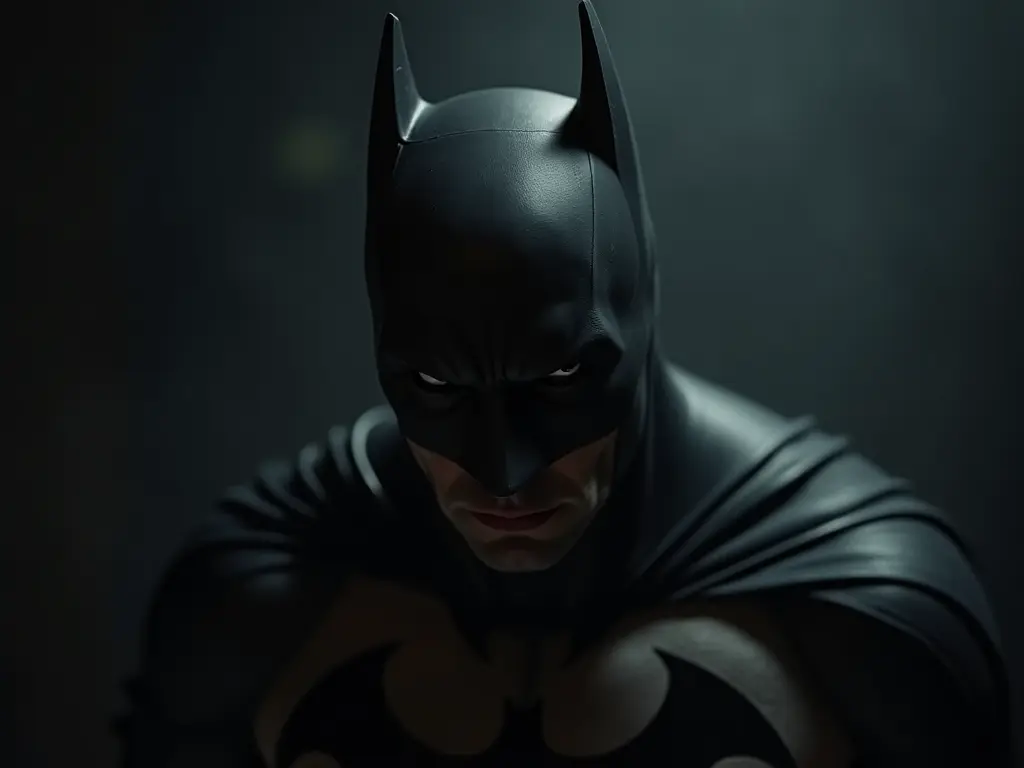

The Hero Who Changed Everything
I was ten years old and was standing in a Buenos Aires comic book shop. I was holding Batman #420 – “Ten Nights of the Beast” part four. At that moment, I realized that American superheroes were much more than something colorful. There was a hidden (dark) Batman psychology behind those drawings. Jim Aparo’s shadowy artwork showed Batman making impossible choices. Batman left enemies to die and confronted moral complexity. My young mind could barely process this. This wasn’t the campy Adam West version my friends joked about. This was something deeper, darker, more real.

That moment changed my relationship with storytelling forever. Thirty years later, I’ve watched Batman evolve across comics, movies, and global culture. I’ve come to understand something profound. Batman psychology isn’t just about one fictional character. It’s about why broken heroes resonate more than perfect ones. It’s about why trauma can become transformation. It explores why the most human superhero happens to be the one with no superpowers at all.
Batman works because he’s us – just with better funding and worse coping mechanisms. He’s the hero we need precisely because he’s the hero we can understand. And that understanding transcends language, culture, and geography in ways that no other superhero has managed to achieve.

The Perfect Storm of Broken
Let’s start with what makes Batman psychologically fascinating: he’s fundamentally damaged goods who turned his damage into his superpower. Bruce Wayne witnessed his parents’ murder at age eight. Instead of doing therapy, he decided to dress like a bat. That included punching crime in the face for the rest of his life.
From a clinical perspective, this should be a disaster. Batman displays clear symptoms of PTSD, depression, obsessive-compulsive tendencies, and what psychologists call “emotional numbing.” He struggles with intimacy and uses violence as his primary problem-solving tool. On top of it all, he has put multiple children in mortal danger by recruiting them as sidekicks. By any reasonable measure, Bruce Wayne needs extensive therapy, not a cape and cowl.

But here’s what makes Batman psychology brilliant: the character works because his response to trauma is completely understandable. At the same time, it is completely wrong. We get why he made these choices. Who wouldn’t want the power to prevent what happened to them from happening to others? But we also see the cost of those choices in his inability to maintain relationships. He experiences isolation. He constantly struggles with his own darkness.
This psychological complexity separates Batman from every other superhero. Superman’s trauma was losing his planet as a baby – abstract, cosmic, cleanly motivating. Spider-Man learned responsibility from his uncle’s death – tragic but ultimately constructive. Batman’s trauma was visceral, personal, and created a hero who’s perpetually one bad day away from becoming the villain.
The Evolution of Darkness: How Different Eras Captured Different Truths
What’s fascinating about Batman psychology is how different creators have emphasized various aspects of his psychological profile. Each creator captures something true about both the character and the era that influenced them.
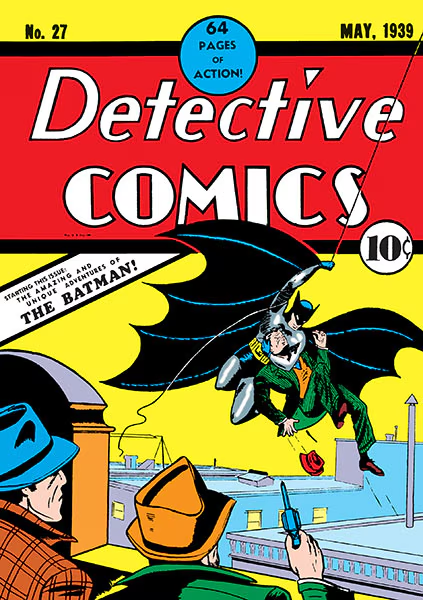
The Golden Age Foundation (1939-1950s): The Vigilante
Bob Kane and Bill Finger’s original Batman was genuinely dark. He carried guns, killed criminals, and operated more like a pulp hero than a superhero. This version understood something crucial: Batman is, at his core, a vigilante motivated by revenge. The psychology here was simple but effective. Trauma creates a need for control, and vigilantism provides the illusion of control over chaos.
This Batman worked because he was honest about what he was. He was a rich man using violence to process his childhood trauma. No pretense of heroism, just raw psychological need dressed up in a cape.
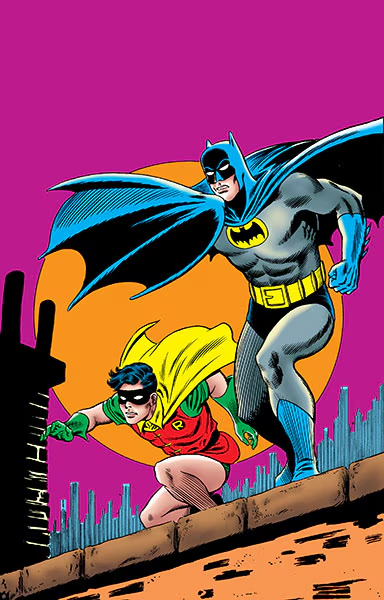
The Silver Age Sanitization (1950s-1970s): The Family Man
The Comics Code Authority forced Batman to evolve. They added Robin, Batgirl, and a whole “Bat-family.” This change psychologically transformed him from a lone vigilante into a father figure. Adam West’s TV series took this to its logical extreme. It turned Batman into a civic-minded do-gooder. He solved problems with gadgets and good citizenship.
From a Batman psychology perspective, this era explored whether Bruce Wayne could heal through connection and community. The answer? Sort of, but at the cost of what made him interesting. The psychology became healthier but dramatically less compelling.
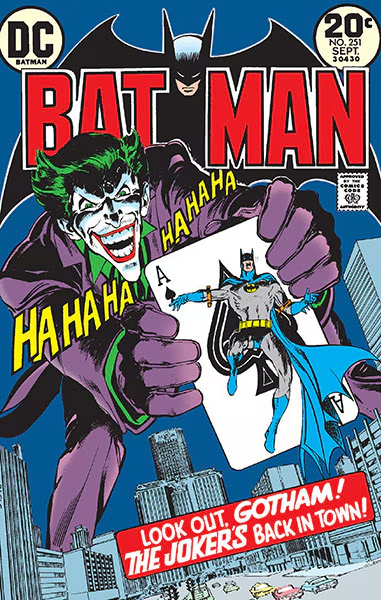
The Dark Age Return (1970s-1980s): The Broken Detective
Dennis O’Neil and Neal Adams started bringing Batman back to his darker roots in the ’70s. Yet, Frank Miller’s “Year One” and “The Dark Knight Returns” fully restored the character’s psychological complexity. Miller understood that Batman psychology requires darkness – not just visual darkness, but emotional and moral darkness.
This Batman was explicitly broken, aging, struggling with whether his war on crime had accomplished anything. Miller’s psychology was brutally honest. Vigilantism is sustainable for a young man processing trauma. But what happens when that young man becomes an old man who’s never processed anything?

Reading “Year One” at age twelve was my second Batman revelation. Miller showed me that great superhero stories could be character studies. They are psychological explorations of what it means to choose to be something other than human.
The Modern Synthesis (1990s-Present): The Mythic Figure
Writers like Grant Morrison, Scott Snyder, and Christopher Nolan have created a Batman psychology that synthesizes all previous versions. He is simultaneously the vigilante. He is also the father figure. Additionally, he is the broken detective. This Batman is conscious of his own psychology in ways previous versions weren’t.
Morrison’s “Batman RIP” explicitly explored Bruce Wayne’s multiple personalities. Snyder’s “Court of Owls” examined how Batman’s need for control makes him vulnerable to conspiracy and paranoia. Nolan’s Dark Knight trilogy showed Batman as a symbol that transcends the psychology of any individual man.
This evolution matters because it shows how Batman’s psychology has become more sophisticated. Our understanding of trauma, heroism, and mental health has evolved.

Why Batman Psychology Transcends Culture
Discovering Batman through comics in Argentina was striking. The character worked just as well when filtered through Spanish translation. He also resonated with South American culture as he did in his original American context. Batman psychology taps into universal human experiences that don’t require cultural translation.
The Orphan Archetype
Every culture has stories about orphans who transform their abandonment into strength. Batman psychology updates this ancient archetype for modern audiences. He’s Oliver Twist with unlimited resources. He is Cinderella if the fairy godmother was a cave full of crime-fighting equipment.
The orphan who becomes powerful is universally compelling because it speaks to everyone who’s ever felt powerless. You don’t need to understand American culture. You just need to understand the psychology of someone who lost everything. They decided to make sure it never happens to anyone else.

The Shadow Self
Carl Jung wrote about the “shadow.” These are the dark aspects of personality. We hide them from others and often from ourselves. Batman psychology is essentially shadow work made manifest. Bruce Wayne confronts his darkest impulses. These include his capacity for violence, his desire for revenge, and his need for control. He uses them as tools for justice.
This psychological framework resonates across cultures because every culture grapples with the relationship between civilization and our baser instincts. Batman psychology offers a model for how to acknowledge our darkness without being consumed by it.
The Wounded Healer
Batman is fundamentally a wounded healer – someone who transforms personal trauma into a tool for helping others. This archetype appears in mythologies worldwide. It addresses a universal psychological truth. Our greatest wounds often become our greatest sources of wisdom and strength.
What makes Batman psychology unique is how it honestly depicts both sides of this transformation. Yes, Batman saves people because of his trauma. But that same trauma also isolates him, damages his relationships, and perpetually threatens to consume him.
The Ranking: Which Batman Captured the Psychology Best?
After decades of reading comics and watching movies, I’ve seen every major interpretation of Batman psychology. Here’s my completely subjective but deeply considered ranking of which versions best captured what makes the character psychologically compelling:

5. George Clooney’s Batman (Batman & Robin, 1997)
The psychology here is non-existent. Clooney’s Bruce Wayne is a quip-making playboy. He shows no visible trauma or internal conflict. He has no reason to be Batman beyond “someone has to wear the suit.” This Batman psychology treats the character as a job. It fundamentally misunderstands everything interesting about the character.
The film’s only psychological insight is unintentional. It reveals how Batman would be if Bruce Wayne had actually processed his trauma in a healthy way. Turns out, that Batman is boring as hell.

4. Adam West’s Batman (Batman TV Series, 1966-1968)
I know this is controversial, but hear me out. West’s Batman psychology is actually quite sophisticated – it’s just not dark. This Bruce Wayne has channeled his need for control into civic duty. He has also channeled his need for family into his relationship with Robin. Psychologically, it’s probably the healthiest version of Batman ever created.
The problem? Healthy Batman isn’t interesting Batman. West’s version works as comedy. It imagines a world where vigilantism can be cheerful. Trauma can be completely processed. It’s charming, but it’s not Batman psychology – it’s Mr. Rogers in a cape.

3. Christian Bale’s Batman (The Dark Knight Trilogy, 2005-2012)
Nolan’s Batman psychology is ambitious and largely successful. Bale’s Bruce Wayne is genuinely traumatized. He struggles with the morality of his mission. Ultimately, he questions whether Batman is helping or hurting Gotham. The trilogy’s arc – Batman as necessary evil, then questioned hero, then redeemed symbol – is psychologically sophisticated.
What pushes this version so high is how it deals with Batman psychology in a realistic world. Nolan asks: what would it actually cost, psychologically and practically, to be Batman? The answer – everything – feels honest and earned.
My only complaint: Bale’s Batman sometimes feels more like a symbol than a person. The psychology is correct but occasionally clinical, missing the raw emotional core that makes the character compelling.

2. Jim Aparo’s Batman (1980s Comic Runs)
This might be personal bias. Aparo’s artwork in stories like “Ten Nights of the Beast” and “A Death in the Family” captured Batman’s psychology perfectly. He achieved this through visual storytelling. His Batman was simultaneously powerful and vulnerable, confident and haunted.
Aparo understood that Batman psychology requires visual darkness. This means not just black costumes and night scenes. It also requires body language that conveys the weight of trauma and moral complexity. His Bruce Wayne looked like someone carrying unbearable burdens. In contrast, his Batman looked like someone who had found a way to weaponize that burden.
What made Aparo’s Batman psychology work was how it balanced the character’s two sides. Bruce Wayne wasn’t just a disguise. He was genuinely struggling with his dual identity. This struggle felt psychologically authentic.

1. Frank Miller’s Batman (Year One, The Dark Knight Returns)
Miller didn’t just understand Batman psychology. He deconstructed it. He rebuilt it into something more complex and honest than what came before. His Batman explicitly examines his own motivations. He questions his methods. He confronts the possibility that his war on crime is making things worse.
“Year One” shows Batman psychology in formation. Bruce Wayne discovers that being a vigilante requires not just physical training. It also demands psychological transformation. “The Dark Knight Returns” reveals the ultimate cost of that transformation. Bruce Wayne is aging and has become so identified with Batman that he can’t stop. This happens even when his body and mind are failing.
Miller’s Batman psychology works because it doesn’t judge the character for his choices while also refusing to romanticize them. This Batman saves people. He destroys himself in the process. This feels like the most honest version of the character possible.

Why The Batman Psychology Matters Beyond Comics
Batman psychology matters because it provides a framework for understanding how people respond to trauma, loss, and powerlessness. In a world where everyone feels increasingly helpless against forces beyond their control, Batman offers a model. This model is flawed and costly, yet undeniably powerful. It shows how individuals can reclaim agency.
The character’s global appeal stems from this psychological universality. Whether you’re reading Batman comics in Argentina, you engage with the same fundamental questions. Watching Batman movies in Japan raises these questions. Cosplaying as Batman in Germany does the same. How do we respond to trauma and channel our darkness?
Batman psychology suggests that the answer isn’t to remove our darkness. Instead, we should acknowledge it, understand it, and find ways to use it constructively. It’s not a perfect model. The character’s isolation and inability to form healthy relationships show the costs of this approach. However, it’s a psychologically honest one.

The Stories That Define Batman Psychology
If you want to understand Batman psychology through comics, these are the essential reads that shaped how creators and fans think about the character:
The Foundation:
- Batman: Year One by Frank Miller – Shows Batman psychology in formation
- The Dark Knight Returns by Frank Miller – Examines the long-term costs of being Batman
- The Killing Joke by Alan Moore – Explores the thin line between Batman and his enemies
The Evolution:
- A Death in the Family by Jim Starlin – How Batman psychology handles failure and loss
- The Long Halloween by Jeph Loeb – Batman as detective and symbol
- Batman: Court of Owls by Scott Snyder – Modern Batman psychology in a conspiracy thriller
The Deconstruction:
- Batman by Grant Morrison (includes Batman RIP) – Explicit exploration of Batman’s multiple personalities
- Batman: The Black Mirror by Scott Snyder – How Batman psychology affects those around him
Visual Storytelling: The Artists Who Got It Right
Batman psychology isn’t just about writing – it’s about visual storytelling that conveys psychological states through art:
Jim Aparo understood that Batman psychology requires a character who looks like he’s carrying the weight of the world. His Batman moved like someone who was always fighting an internal battle.

Greg Capullo’s work on Scott Snyder’s run captured both the mythic and human aspects of Batman psychology. His Bruce Wayne looked genuinely haunted, while his Batman looked genuinely terrifying.
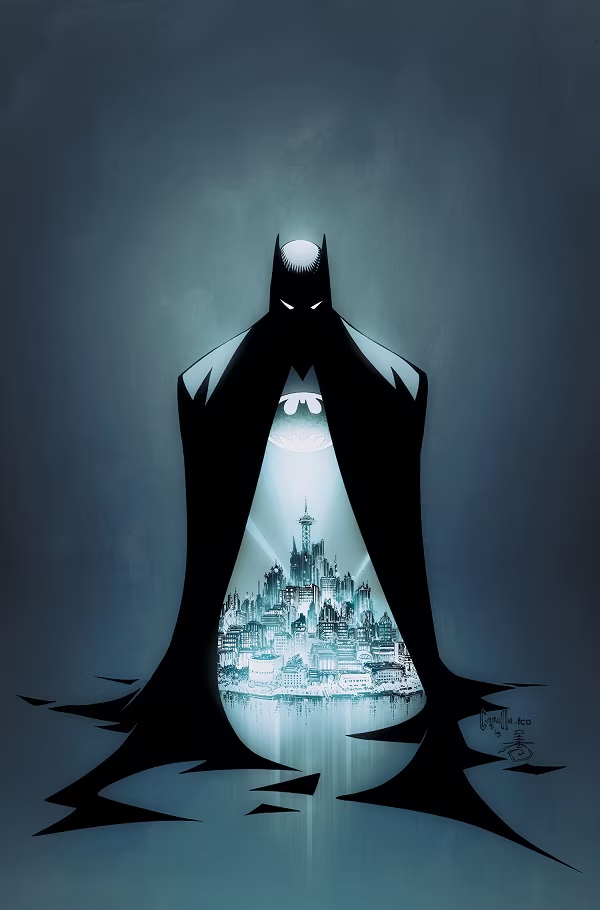
Frank Miller’s stylized approach in “The Dark Knight Returns” showed Batman psychology through aging, brutality, and visual metaphor. His Batman looked like trauma made manifest.
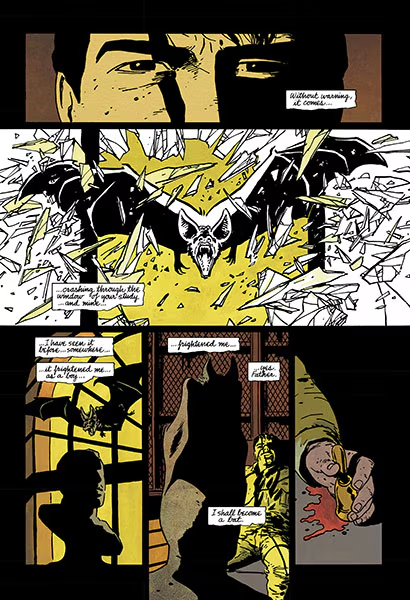
The artists who understand Batman psychology know that the character’s internal state must be visible in his external presentation. Batman doesn’t just fight crime – he embodies the psychological cost of fighting crime.
The Uncomfortable Truth About Batman Psychology
Here’s what makes Batman psychology genuinely complex: the character probably shouldn’t be a role model, but he’s undeniably inspirational. His response to trauma is psychologically understandable but practically terrible. The methods: effective but morally questionable. His dedication is admirable but personally destructive.
This paradox is what makes Batman psychology fascinating rather than merely dark. The character forces us to confront uncomfortable questions about justice, trauma, and the cost of heroism. He suggests that sometimes the people who save us are the ones who can’t save themselves.
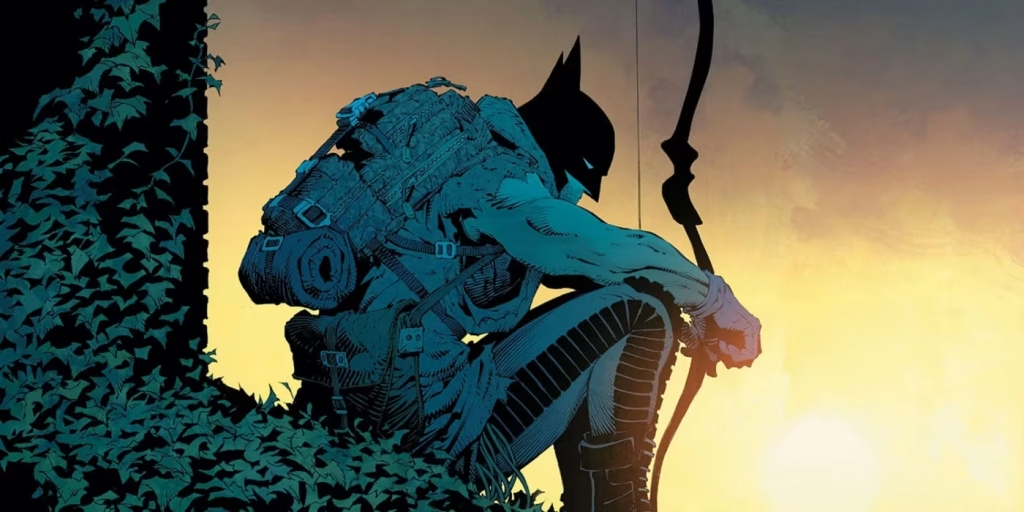
Batman psychology works because it doesn’t provide easy answers. Instead, it offers a complex, flawed, psychologically honest exploration of what it means to transform pain into purpose. It acknowledges that this transformation is possible but refuses to pretend it’s simple or cost-free.
The Final Lesson
That ten-year-old kid in Buenos Aires discovered Batman through Jim Aparo’s artwork and Jim Starlin’s writing. He learned something crucial about storytelling and psychology. The most compelling characters are the ones who transform their wounds into their weapons. Batman psychology taught me a valuable lesson. Heroes aren’t people without problems. They are people who use their problems to help solve other people’s problems.
This lesson extends far beyond comics. Batman psychology provides a framework for understanding how anyone can transform trauma into strength, darkness into purpose, pain into power. It is not a perfect model. It has its costs. However, it is psychologically honest about both the possibilities and limitations of human resilience.
Batman endures because he represents something psychologically essential. He shows us the possibility that our greatest wounds can become our greatest sources of strength. He demonstrates that it is possible to turn our shadow into our superpower. This transformation may require sacrifices that most of us aren’t willing to make.

In a world that often feels chaotic and powerless, Batman psychology offers hope. This is not the naive hope that everything will work out fine. It is the mature hope that we can find ways to fight back against the darkness. Even if we can never fully defeat it, we can still resist.
That’s why Batman works. That’s why his psychology matters. Thirty years after that first comic shop revelation, I’m still here. I am writing about the world’s most psychologically complex superhero.
Sometimes the heroes we need aren’t the ones who save themselves. They refuse to let their brokenness stop them from saving others.
Batman and all related characters, names, marks, emblems and images are trademarks of DC Comics / Warner Bros This content is transformative commentary and review material created by Fandoria and is not affiliated with or endorsed by the companies mentioned.


Leave a Reply