
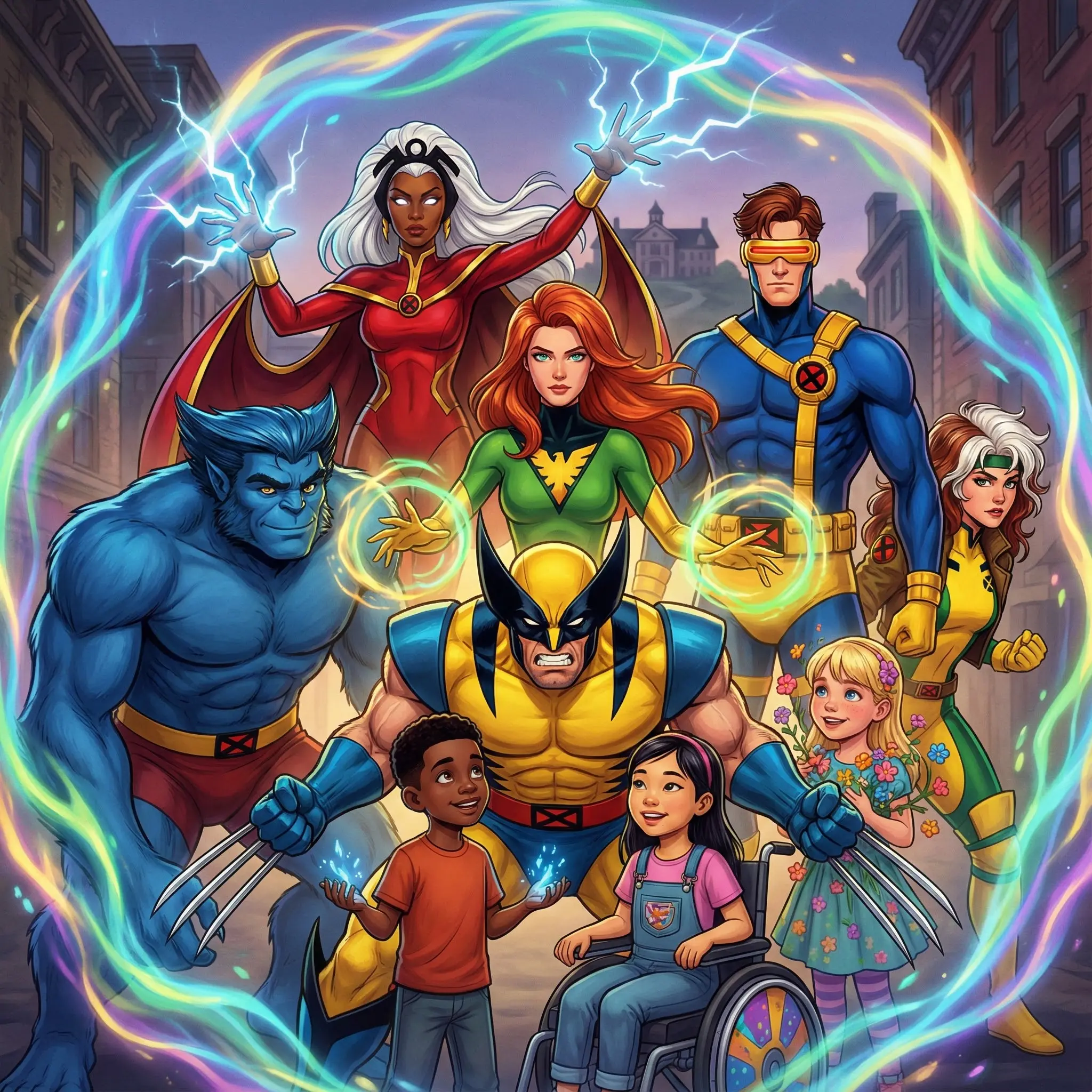

The Mutant Comeback Nobody Saw Coming
I learned English reading X-Men comics. Not Shakespeare, not textbooks, just Wolverine growling “bub” and Storm commanding lightning in ways that made poetry seem boring. Those comics taught me that outcasts could be heroes, that being different wasn’t a bug but a feature.
Which is why X-Men ’97 hits so hard. This isn’t just nostalgia bait disguised as content—it’s a love letter to everyone who ever felt like they didn’t belong. The MCU juggles multiverse mechanics like a street performer. But X-Men ’97 gets to the essence of what made these characters legendary: They’re us, just with better powers. They have worse family therapy sessions.

The show picks up directly from the 1990s animated series that defined Saturday mornings for an entire generation. Same theme song that still gives you goosebumps. Even the same voice actors who made these characters feel real. And an unflinching approach to tackling prejudice, identity, and what it means to fight for a world that hates you.
But this X-Men ’97 guide isn’t just about reliving childhood memories. The series demonstrates that animated superhero stories can manage complexity. Live-action often fumbles this task. It delivers metaphor and action with equal precision.

What Makes X-Men ’97 Essential Viewing
X-Men ’97 is the direct continuation of X-Men: The Animated Series (1992-1997). It picks up where that groundbreaking show left off. The original series was lightning in a bottle. It tackled racism, genocide, disability rights, and queerness. These themes were explored through the metaphor of mutants during Saturday morning cartoon slots.
Kids ate cereal while learning about the Mutant Registration Act and the trauma of displacement. Parents probably didn’t realize their children were getting a masterclass in civil rights history disguised as superhero entertainment.
The animation style receives a gorgeous upgrade while maintaining that nostalgic feel. Voice acting remains largely intact, with the original cast returning to breathe life into characters they’ve embodied for decades. Most importantly, the themes sharpen rather than dull—X-Men ’97 doesn’t water down its politics for modern sensibilities.

Mutants as Mirror: Why These Stories Still Matter
From day one, X-Men were never just superheroes with cool powers. Stan Lee and Jack Kirby created them during the Civil Rights era as direct commentary on racial prejudice and social justice. The genius lay in the metaphor’s flexibility—mutants could represent any marginalized group.
Professor Xavier and Magneto have long been interpreted as allegorical figures. They represent different approaches to civil rights. One advocates integration, and the other advocates separation. But the metaphor extends far beyond racial identity. X-Men stories have spoken to LGBTQ+ communities and immigrants. They have also connected with neurodivergent individuals and anyone who’s felt born into a world that fears them.


X-Men ’97 embraces this legacy without hesitation. Characters grapple with persecution, betrayal, identity, and belonging—themes that Marvel’s film division sometimes sanitizes for mass appeal. The animated format allows for rawer storytelling that feels authentic rather than focus-grouped.
The Power of Metaphor in Action
Take the Legacy Virus storyline, which the series incorporates with devastating effect. Originally created as an AIDS allegory, the story explores how society responds to disease that primarily affects marginalized communities. X-Men ’97 handles this material with intelligence and sensitivity, proving that superhero stories can tackle serious issues without losing their entertainment value.

From Comics to Cultural Phenomenon
The X-Men journey from struggling comic series to cultural touchstone reads like its own superhero origin story. Created in 1963, the original series actually got canceled due to poor sales. The real magic happened with the 1975 relaunch in Giant-Size X-Men #1, which introduced Storm, Colossus, Nightcrawler, and Wolverine.
Throughout the 1980s and 90s, writers like Chris Claremont transformed X-Men into Marvel’s flagship property. Claremont’s run tackled everything from interdimensional genocide (Days of Future Past) to religious fundamentalism (God Loves, Man Kills). The comics made room for powerful women, complicated villains, and storylines that pushed boundaries.

When X-Men: The Animated Series launched in 1992, it had decades of rich source material to draw from. The cartoon catapulted mutants into mainstream consciousness, setting the stage for the successful film franchise that followed.
For fans looking to dive deeper into comic lore, [House of X/Powers of X] by Jonathan Hickman provides a modern reinvention of mutant society. And this one feels as revolutionary as the original Claremont run. The storyline completely recontextualizes mutant history while maintaining the core themes that make X-Men special.
Character Breakdown: The Core Team That Defined Heroism
X-Men ’97 features an expanded roster of characters, each carrying emotional weight that spans decades of storytelling. Understanding these personalities makes the show’s impact even stronger.
Cyclops remains the reluctant leader, torn between duty and personal loss. His relationship with Jean Grey and tension with Magneto creates dramatic possibilities that the show exploits brilliantly. Scott Summers represents the burden of leadership and the cost of always doing what’s right.

Jean Grey carries the weight of Phoenix history, a telepath whose power threatens to consume her. The show handles her carefully, avoiding the repetitive Phoenix storylines that have plagued other adaptations.
Wolverine delivers the snarky, brooding presence fans expect, but X-Men ’97 reveals the humanity beneath the claws. Logan’s journey from loner to family member provides some of the series’ most touching moments.
Storm commands both weather and respect as the team’s moral compass. Ororo Munroe’s regal presence and spiritual connection to nature ground the team during its most chaotic moments.

Rogue’s tragic inability to touch others creates constant emotional tension. Her Southern charm mixed with profound loneliness makes every interaction carry weight. The show explores how physical barriers affect emotional intimacy in ways that feel genuinely moving.
Beast quotes Shakespeare while throwing cars, representing the intellectual heart of the team. Hank McCoy’s gentle giant persona provides philosophical depth to balance the action sequences.
Magneto’s controversial leadership position creates the series’ most compelling dynamic. Erik Lehnsherr stepping into Xavier’s role challenges every character’s assumptions about loyalty, justice, and redemption.
Essential Comic Stories That Shape the Show
X-Men ’97 draws from decades of comic history, weaving classic storylines into its narrative framework. Understanding these source materials enhances the viewing experience significantly.
The Dark Phoenix Saga casts a shadow over Jean Grey’s development. While the show doesn’t retread familiar ground, Phoenix history informs every scene involving Jean’s powers.

Days of Future Past established the template for mutant persecution stories. The Sentinel program and dystopian futures serve as constant threats that give weight to current conflicts.

The Trial of Magneto explores themes of forgiveness and redemption that drive the series’ emotional core. Can someone who’s committed terrible acts truly change? The show grapples with these questions honestly.

God Loves, Man Kills by Chris Claremont remains one of the most powerful X-Men stories ever told. This graphic novel, available in multiple collected editions, tackles religious fundamentalism and hate crimes with unflinching directness. The themes resonate strongly with X-Men ’97’s approach to social issues.

The Mutant Massacre and Genosha storylines provide background for the series’ exploration of genocidal trauma. These events shaped mutant culture in ways that continue reverberating through current stories.

Why X-Men ’97 Hits Different in Current Times
We’re living through an era of polarized identity politics, rising authoritarianism, and social upheaval. X-Men ’97 taps into these anxieties while offering something rare in modern superhero storytelling: hope earned through struggle.
The series doesn’t offer easy answers or perfect solutions. Characters make mistakes, trust breaks, and sacrifices demand real costs. The show never loses sight of what makes X-Men fundamentally optimistic. It is the belief that outcasts deserve a place worth fighting for.
X-Men ’97 focuses on character relationships. It also emphasizes emotional truth. This focus differs from many contemporary superhero properties that get bogged down in world-building mechanics. The mutant metaphor provides flexibility to address current issues without feeling preachy or heavy-handed.
Animation Advantage: Why This Format Works
X-Men ’97 proves that animation offers unique advantages for superhero storytelling. The medium allows for visual spectacle that would cost hundreds of millions in live-action. It also maintains intimate character moments that feel authentic.
Animation also provides distance from real-world politics in ways that help metaphorical storytelling. When Storm controls lightning or Magneto manipulates metal, the fantastical elements enhance rather than distract from social commentary.

The voice acting brings decades of familiarity to these characters. Cal Dodd’s Wolverine, Catherine Disher’s Jean Grey, and Lenore Zann’s Rogue sound exactly as fans remember, creating instant emotional connection.
Your Mutant Journey Starts Here
Ready to dive into the X-Men universe? This X-Men ’97 guide recommends starting with the show itself—it’s designed to welcome newcomers while rewarding longtime fans.
Essential Viewing Path:
- Start with X-Men ’97 for the most modern, accessible entry point on Disney+
- Watch X-Men: The Animated Series to understand the foundation (available on Disney+)
Comic Deep Dives:
- Giant-Size X-Men #1 launched the modern era of mutant comics
- The Dark Phoenix Saga provides essential Jean Grey backstory
- Days of Future Past established dystopian mutant futures
- God Loves, Man Kills tackles religious persecution with devastating effect
- House of X/Powers of X reimagines mutant society for contemporary readers
Character-Focused Recommendations:
- Storm’s origin story in Storm (2014) series by Greg Pak
- Wolverine’s history in Origin by Paul Jenkins
- Nightcrawler’s faith journey in Nightcrawler (2014) by Chris Claremont
Each entry point offers different perspectives on what makes mutants special. The beauty lies in discovering which characters and storylines resonate most personally.
The Cultural Legacy That Keeps Growing
X-Men ’97 represents more than just successful nostalgia—it demonstrates that stories about outcasts finding family remain eternally relevant. The series proves that animated superhero content can handle complex themes without sacrificing entertainment value.
The show’s success also suggests appetite for thoughtful superhero storytelling that prioritizes character development over universe-building mechanics. Sometimes the most revolutionary thing you can do is tell good stories about people who care about each other.
Beyond the Screen: Building Your Collection
For fans inspired to explore further, the X-Men universe offers decades of incredible storytelling across multiple media. Building a collection doesn’t require massive investment—strategic choices can provide comprehensive understanding of mutant lore.
Budget-Friendly Starting Points:
- [X-Men: Grand Design] by Ed Piskor condenses decades of history into accessible graphic novels
- [Marvel Unlimited] subscription provides access to thousands of X-Men comics
- [X-Men: Evolution] animated series offers different character interpretations
Premium Collector Options:
- [Uncanny X-Men Omnibus collections] preserve Chris Claremont’s legendary run
- [X-Men Animated Series DVD sets] include commentary and behind-scenes features
- [Marvel Masterworks editions] showcase classic stories with restored artwork
The key is following your interests rather than completionist impulses. Whether you’re drawn to action, character drama, or social commentary, the X-Men universe has stories that will speak to you.


The Bigger Picture: Why This Matters
X-Men ’97 succeeds because it understands something fundamental about superhero storytelling: the best powers are metaphors for real human experiences. Being different isn’t a curse to overcome but a strength to embrace.
In an entertainment landscape often obsessed with cynicism and deconstruction, X-Men ’97 offers something radical. It presents genuine optimism about humanity’s potential for growth and acceptance. The series suggests that outcasts don’t need to hide. They don’t need to assimilate. They need to find their tribe and fight for their right to exist.

That message resonates with everyone. It resonates whether you’re a kid discovering these characters for the first time. It also resonates if you are an adult rediscovering why they mattered in the first place. Mutants were never supposed to be easy heroes, and that’s exactly why we love them.
The X-Men ’97 guide ultimately leads to one simple truth. Stories about finding family among fellow outcasts will never stop being relevant. As long as people feel different or misunderstood, there will always be room for mutants. They prove that being different is actually being special.
Sometimes the greatest superpower is simply refusing to hide who you are.


Leave a Reply