
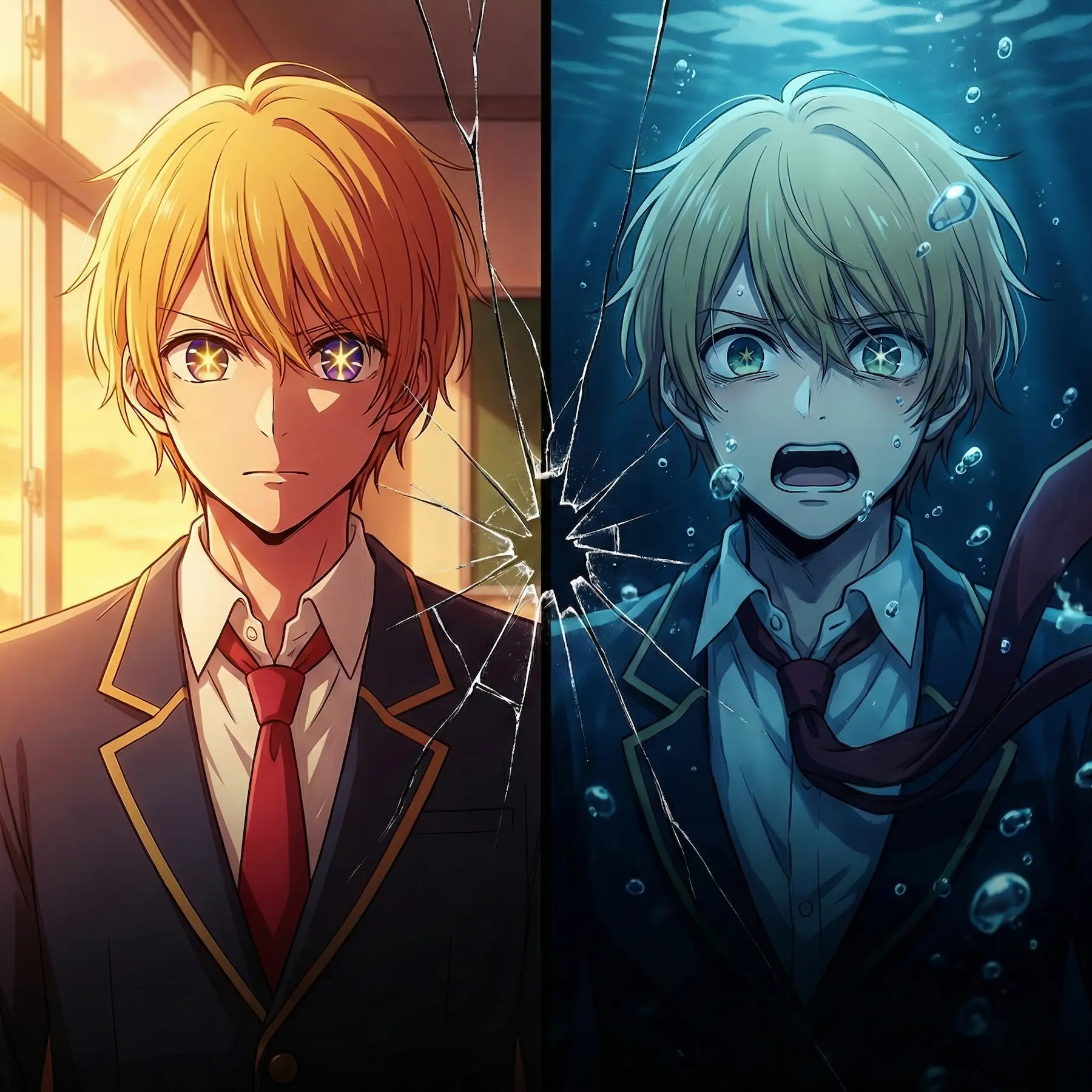

After Oshi no Ko Season 3 dropped on Crunchyroll, manga readers watched anime-only fans walk into a slaughter…
SPOILER WARNING: I’m about to ruin this for you.
Aqua Hoshino stabs himself in the chest and drowns his father in the ocean. That’s how this “masterpiece” ends. Not with clever plotting or character growth, but with suicide dressed up as heroism.
Aka Akasaka spent four years building Aqua into someone worth caring about, then remembered he wrote an outline in 2020 where the kid dies. So he killed him anyway, character development be damned.
This isn’t tragedy. It’s authorial cowardice.

Batman Drove the Batmobile Off a Cliff
Aqua’s arc was about learning to live beyond revenge. Season 1: obsessed with finding his father. Season 2: starts forming real connections with Kana, Akane, Ruby. The story trained us to expect growth, healing, maybe even happiness.
Then Chapter 164 happens. Batman learns to trust people, builds a found family, grows beyond his trauma—and drives the Batmobile off a cliff because “this was always the plan.”
That’s what Akasaka did to Aqua. Word for word.
The suicide isn’t earned. It’s imposed. Aqua had options, allies, people who cared about him. The story just pretends they don’t exist when it needs him dead.

The Kaguya Autopsy: Dissecting Akasaka’s First Failure
Want to understand what’s coming for Oshi no Ko? Study the Kaguya-sama finale. It’s a masterclass in creative bankruptcy disguised as resolution.
Kaguya-sama’s final arc “poorly resolved Kaguya’s family issues and various other character arcs,” leaving fans so disappointed that the anime is creating an entirely original ending to avoid adapting it. When your own adaptation team won’t touch your finale, you’ve failed spectacularly.
The manga’s ending was “criticized for not closing out the story as effectively as possible” because Akasaka shifted focus from comedy to drama without understanding how to write either properly. Four years building a rom-com, then abandoning the formula that made it work.
Ishigami and Iino’s relationship “was already being built up in the anime in seasons two and three” but gets zero closure in the manga. Kaguya’s toxic family dynamics? Handwaved away. The series had “stronger focus on relationship drama, with comedy and the original ‘war’ premise having long ago taken a backseat.”
Sound familiar? Oshi no Ko followed the exact same trajectory. Build engaging characters with compelling arcs, then abandon them when the predetermined ending demands sacrifice.
The Kaguya-sama disaster taught us Akasaka’s method: write amazing beginnings, get attached to tragic outlines, refuse to adapt when the story evolves. He even admitted the ending was planned “roughly four years ago” and refused to change it despite the story growing beyond those original constraints.
Love Agency? Canceled after one year because Akasaka can’t sustain momentum without a predetermined tragedy to aim toward.
The pattern is ironclad: Brilliant setups, cowardly endings. Characters he doesn’t know how to save die, sidelined, or simply forgotten. It’s not tragedy—it’s creative exhaustion dressed up as artistic vision.
Aqua’s suicide isn’t shocking because it’s inevitable. It’s shocking because we’ve seen this movie before, and we know how it ends.

Oshi no Ko Truth: Everyone Dies With Aqua
Kana never gets her answer. Four years of “will they, won’t they,” and she gets to watch his funeral instead.
Akane saves him from darkness multiple times, represents his potential for healing—made irrelevant by a revenge plot that ignores everything she taught him.
Ruby loses her brother right when she needs him most. The story calls this “growth.” I call it trauma porn.
Every relationship Aqua built gets nuked because Akasaka couldn’t figure out how to resolve them properly.

The Industry Commentary Dies Too
Oshi no Ko spent years criticizing how the entertainment industry consumes tragedy for content. Ai’s death was horrific because it reduced a person to a symbol.
Then Akasaka does the same thing to Aqua. His death becomes “noble sacrifice,” “beautiful tragedy,” content for Ruby’s character development.
The series becomes everything it claimed to hate.
That’s not irony. That’s hypocrisy.

Can Doga Kobo Save This Disaster?
Studio Doga Kobo has two choices: follow the manga off the cliff or save this story from its creator.
But let’s be honest about their odds.
Doga Kobo was founded in 1973 and spent decades as a support studio before finding their niche: “Cute Girls Doing Cute Things” shows. YuruYuri made them famous. Monthly Girls’ Nozaki-kun, Gabriel DropOut, New Game!—their specialty is faithful adaptations of slice-of-life comedy.
They’ve never rescued a story from deliberate self-destruction.
Their entire reputation depends on being the studio that doesn’t change source material. When fans see “Doga Kobo” attached to a project, they expect faithful adaptation enhanced with gorgeous animation. That’s their brand.
Now Kadokawa Corporation owns the brand, which acquired them in 2024 specifically because of Oshi no Ko’s success. Corporate pressure favors playing it safe. Deviating from a controversial but canonical ending means risking the IP’s merchandising value, international distribution deals, and multimedia expansion.
Precedent exists for studios changing endings—Fullmetal Alchemist: Brotherhood, Attack on Titan’s improvements. But those were different situations entirely. FMA: Brotherhood happened because the 2003 anime caught up to unfinished source material. Attack on Titan’s changes were minor tweaks, not fundamental story alterations.
Oshi no Ko Season 3’s problem isn’t incomplete source material. It’s that the complete source material sucks.
Studio Doga Kobo has never faced a situation where the manga ending actively betrays the story they’ve been adapting. Their expertise is making great material look beautiful, not saving bad material from itself.
The corporate math is simple: Oshi no Ko is a massive property generating millions in revenue. Making major changes to accommodate fan complaints is a business risk most committees won’t approve, especially when the controversial ending will generate discussion and engagement regardless.
The animation will be gorgeous. The voice acting will destroy you. But all that talent is about to go to waste on an ending that betrays everything that came before.
Hope is a luxury Akasaka doesn’t deserve.

Oshi no Ko Verdict: Masterpiece Suicide
Oshi no Ko could have been legendary. Complex characters, industry commentary that mattered, themes about authenticity in a world built on lies. But instead, it ended up creating the mother of all cautionary tales about what happens when writers serve outlines instead of stories.

Aqua deserved better. The fans deserved better. The story deserved better. Akasaka chose the easy way out: kill the character rather than resolve his arc. That’s not tragedy. That’s creative bankruptcy.
Season 3 is available on Crunchyroll. Watch for the journey. Grieve for the destination.
The stars lied after all.


Leave a Reply